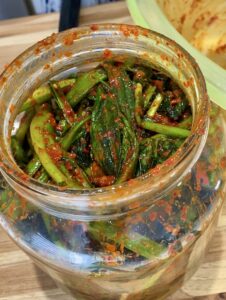
Yu Choy Kimchi
Yu choy is not a very commonly used for kimchi, but everything about its preparation is traditional! It's spicy, tangy, and well fermented.
Servings: 3 lbs
Ingredients
- 2 lbs yu choy or mustard greens
- 1/2 cup Korean sea salt or Kosher salt
- 3 green onion stalks
- 1/2 bunch Asian chives
For the rice porridge (sauce binder)
- 1 cup water
- 2 tbsp glutinous rice flour
Seasoning Sauce
- 2/3 cup gochugaru
- 2 tsp fresh ginger
- 10 garlic cloves
- 1 red chili pepper optional
- 1/3 cup fish sauce
- 2 tbsp sugar
- 1/2 tsp msg
Instructions
- Cut the ends off the yu choy (about 2 inches from the bottom) and discard any wilted or brown pieces. Cover the yu choy in Korean sea salt (or kosher salt) then sprinkle over about 1/2 cup water to make the salt stick. Toss to coat evenly.
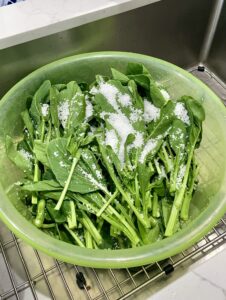
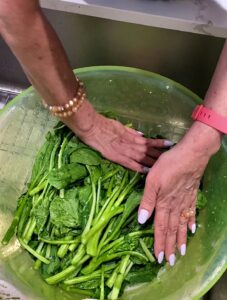
- When the yu choy shrinks down after about 30 minutes, flip it over. Repeat this step 2 more times.
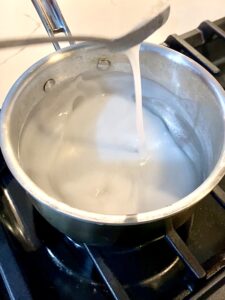
- Prepare the rice porridge: this is going to be our binder for the seasoning sauce. Mix 1 cup of room temperature water with 2 tbsp of glutinous rice flour in a sauce pan until there are no clumps. Turn on the stove to medium low heat and stir until it has thickened. Once thickened, remove from heat and let it cool down completely.
- In a mortar and pestle, crush the ginger, garlic, and red chili pepper.
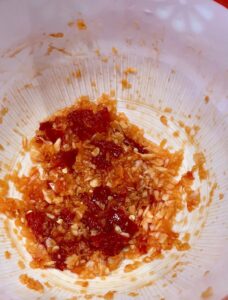
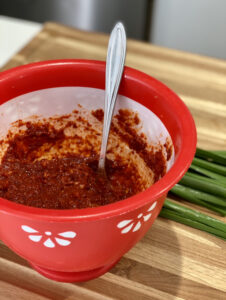
- Add the gochugaru, fish sauce, sugar, msg, and rice porridge. Mix well.
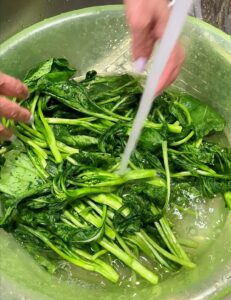
- When the yu choy is ready, it will shrink by half its original size and be flexible but still crunchy. Wash the yu choy with cold water and place them into a colander. Wash the green onions and asian chives too.
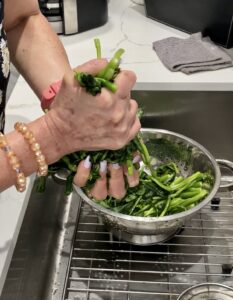
- Squeeze out as much water as you can from the yu choy. A little moisture is fine, but too much will cause the yu choy to get mushy instead of staying crunchy.
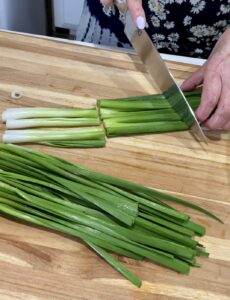
- Slice the green onions one time lengthwise through the white parts to separate them. Cut both the green onions and Asian chives into 4 inch pieces (cut them into thirds).
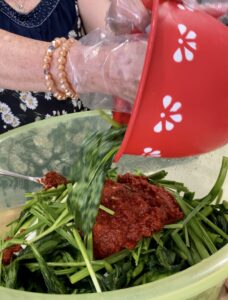
- Add the seasoning sauce to the yu choy, green onion, and chives.
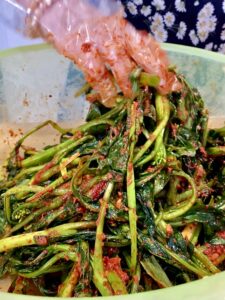
- Mix thoroughly by pulling the yu choy upwards to evenly distribute the sauce throughout. This may take a few minutes, work slowly and try not to make a mess.
- Store in a jar and push down so that there are no air pockets. Keep it at room temperature for at least 1 day (depends on how sour you like yours), then keep it in the refrigerator for up to 4 months. I think it starts to taste best after 2-3 weeks of fermenting in the fridge, but my mom also likes to eat it right away with some rice.