

This post may contain affiliate links. Please see our disclosure policy.
These creamy Nurungji Paletas combine the absolute best of my childhood comfort foods. Blending the deeply roasted, nutty flavors of boricha (barley tea) and nurungji (toasted rice), it’s a sweet & creamy treat you’ll want to make all summer long!
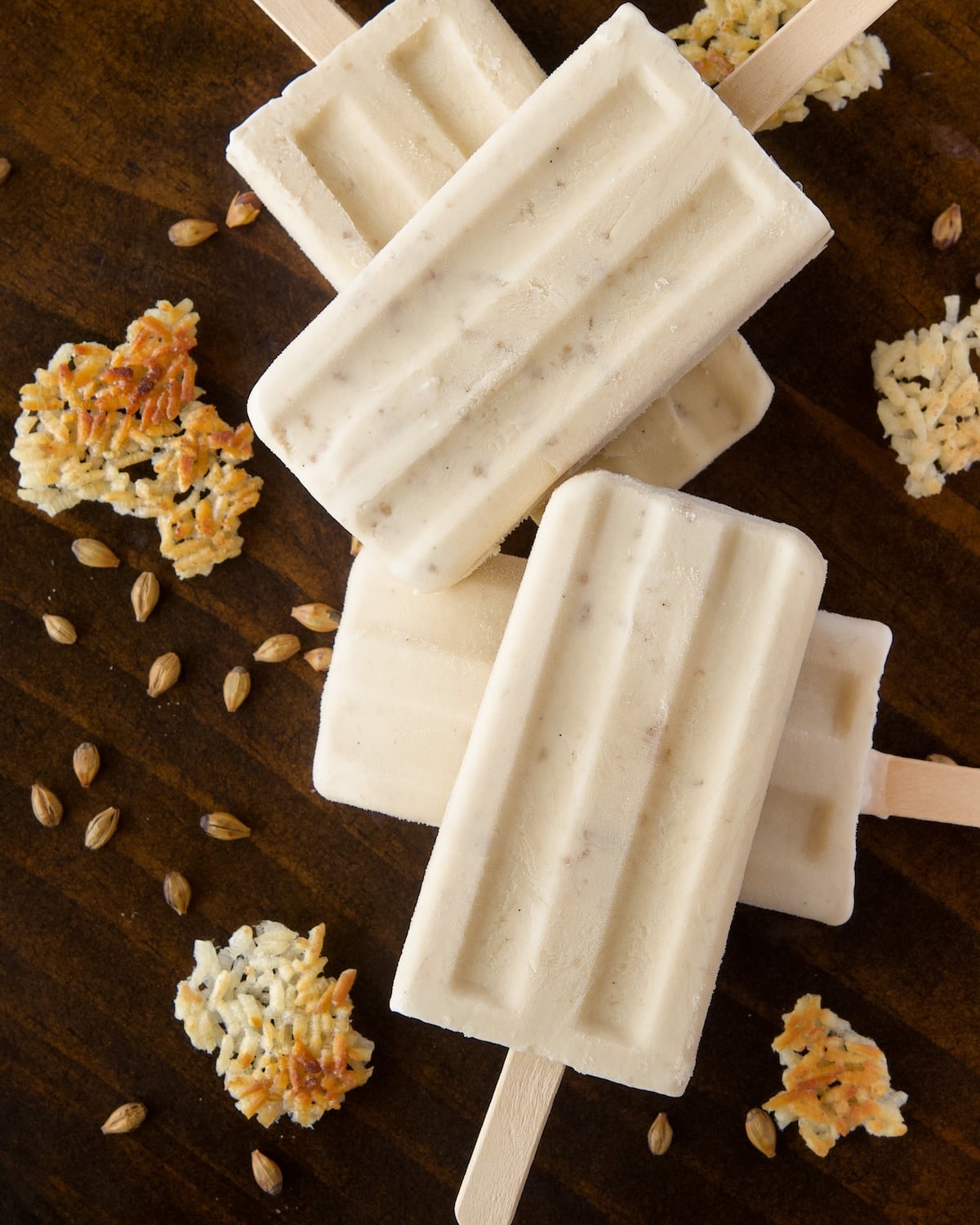
If you’ve been following me for a while, you probably know two things about me: I am obsessed with nurungji (toasted rice), and I make new paleta flavors every summer.
Last year, I had the idea to recreate the chewy texture of the arroz con leche paletas my dad loved, into a Korean version using nurungji. One of my favorite ways to eat nurungji is with some ice-cold boricha (barley tea) and kimchi or ojingeo jeot (fermented spicy squid). I thought about incorporating kimchi, but failed to see a way that would work.
Then I debated going water or cream-based. Then, I thought about those viral brown sugar boba bars. If I went the cream route, a boricha and brown sugar base would perfectly capture that classic milk tea vibe– with the toasted rice bits stepping in as the “boba” texture. Genius, right?!
Why You’ll Love This Recipe
- Deeply Roasted, Nutty Flavor: The strong-brewed barley tea combined with caramelized brown sugar and cream creates a complex, nutty flavor profile that tastes similar to brown sugar milk tea.
- That “QQ” Mochi Texture: The starches from the rice lend a brilliant, mochi-like texture to the cream base itself, adding a unique and incredibly pleasant body to the otherwise smooth and creamy pop.
- Perfectly Chewy Rice Bits: The toasted nurungji bits stay perfectly chewy when frozen, and they add an incredible toasty flavor that is so familiar and comforting!
What Are Paletas?
Paletas are traditional Mexican popsicles made with fresh ingredients like fruit, cream, milk, or even spices. Unlike store-bought popsicles, paletas are known for their natural ingredients. You’ll often find real chunks of fruit, swirls of caramel, and real natural flavors.
There are two main types:
- Paletas de agua: fruit-based and made with water or juice, great for a light and refreshing treat. Some examples of these are my Mango & Chamoy Paletas, or my Paletas de Piña (Pineapple Popsicles).
- Paletas de crema: cream-based and richer, made with milk, cream, and/or sweetened condensed milk. These are a little more versatile as they can go beyond fruit flavors! My most popular cream-based paletas are Creamy Strawberry Popsicles and Corn & Cajeta Paletas.
Paletas are a staple in Mexican food culture, often sold at local paleterías (popsicle shops), from paleteros (pushcarts), or made at home using seasonal fruit. They’re a fun, nostalgic, and customizable way to cool down and enjoy real flavors. No artificial flavoring needed!
Ingredients You’ll Need:
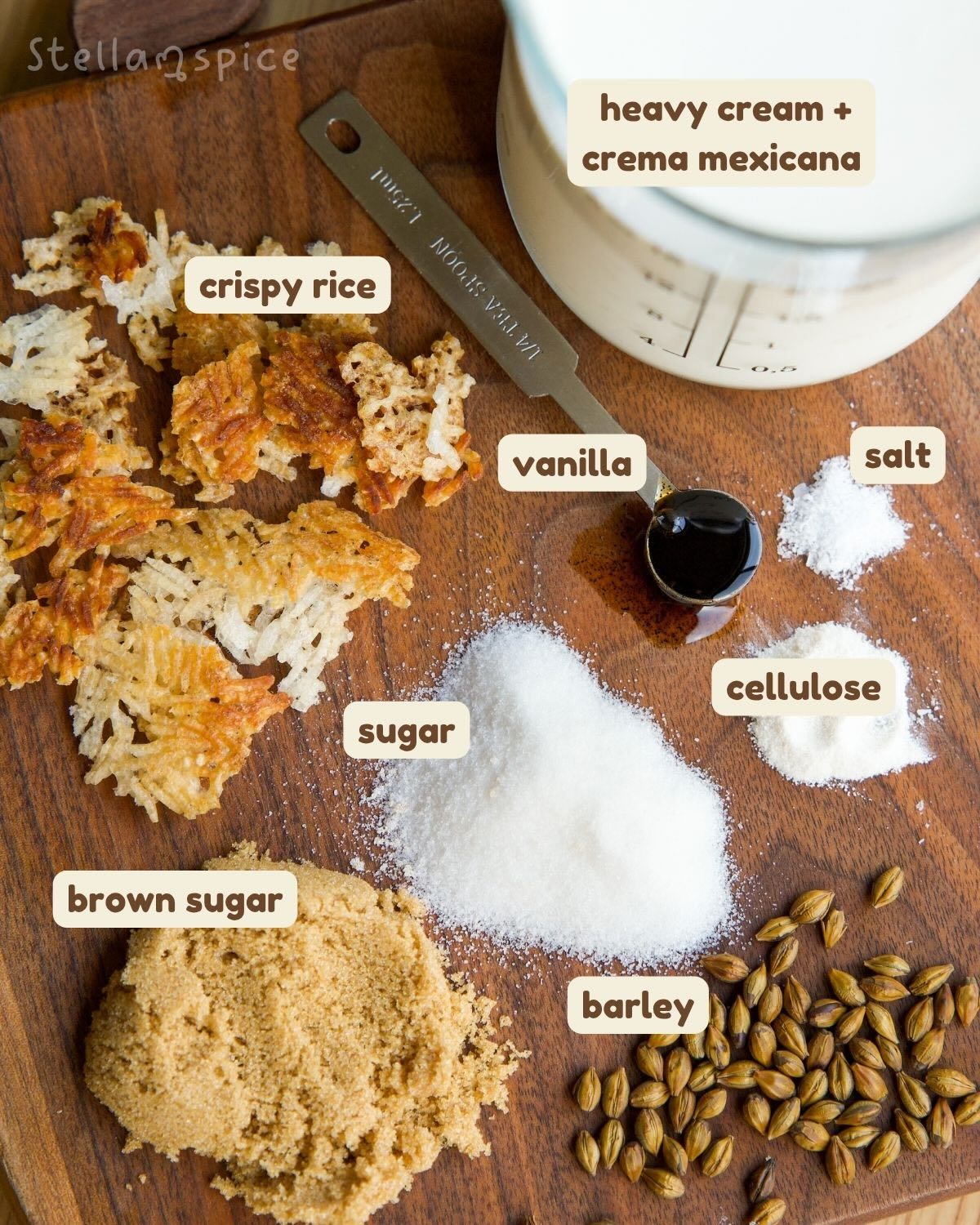
- Short-Grain Rice: Crucial for making the nurungji. The high starch content is what gives the rice bits their signature chewy, mochi-like texture when frozen.
- Boricha (Barley Tea): Brewed strong. This adds a nutty, roasted depth that cuts through the richness of the dairy.
- Crema Mexicana: Thicker and slightly more acidic than regular heavy cream, this gives the base its signature body and velvety mouthfeel. In Mexico, this is simply called crema or crema fresca.
- Heavy Cream: Adds the perfect amount of fat for a rich, premium paleta texture.
- Brown Sugar & White Sugar: A specific blend to give you that classic brown sugar milk tea vibe while keeping the freezing point exactly where it needs to be.
- Cellulose Powder: My secret weapon! A tiny bit mixed into the sugar prevents ice crystals from forming (super creamy, not icy), and helps give the base its unique texture. This is optional but highly recommended.
- Vanilla Extract & Salt: Just a splash and a pinch to round out the flavors and make the toasted notes pop.
Step-by-Step Instructions:
For the full ingredient list and instructions, jump to the recipe card at the end of this post.
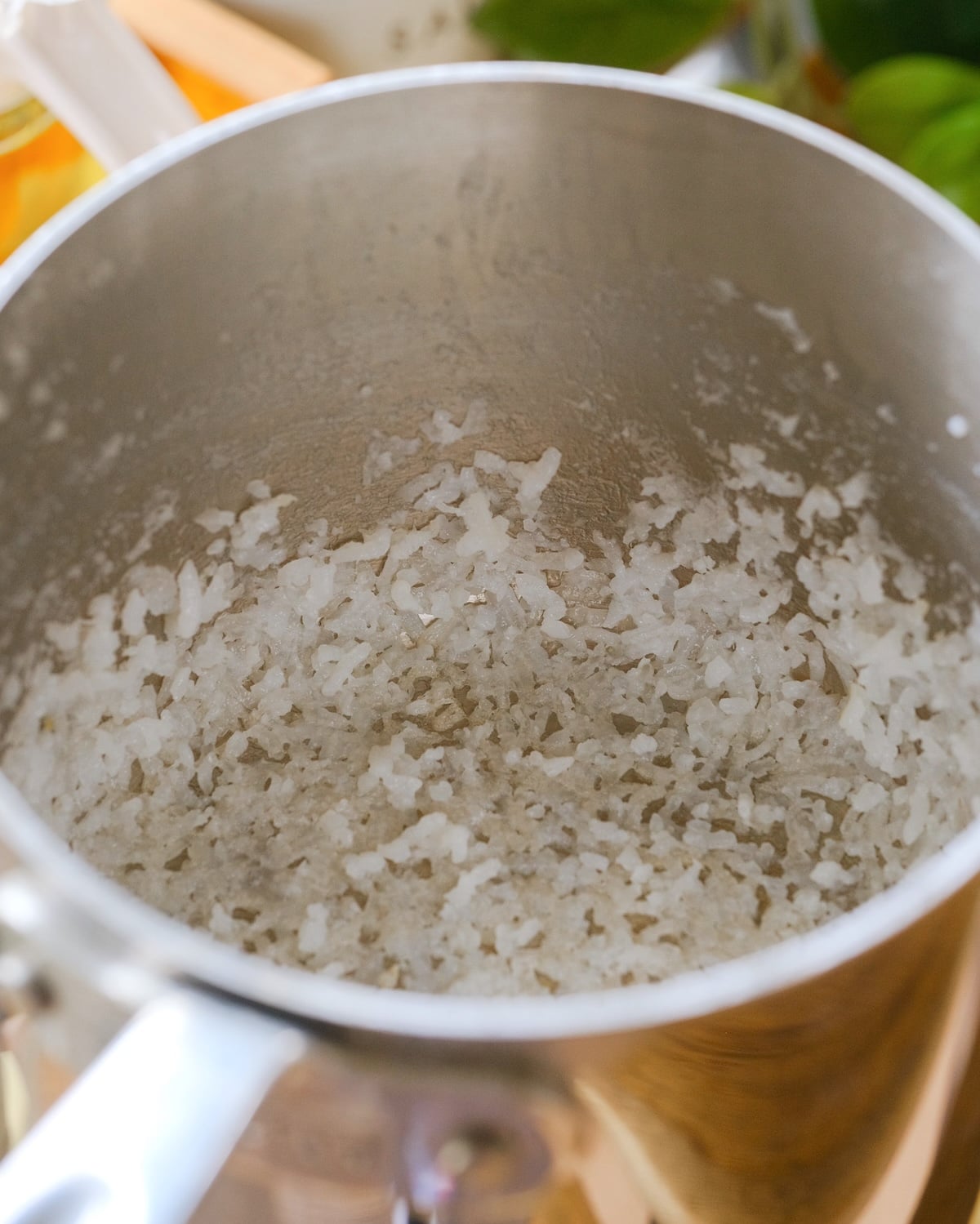
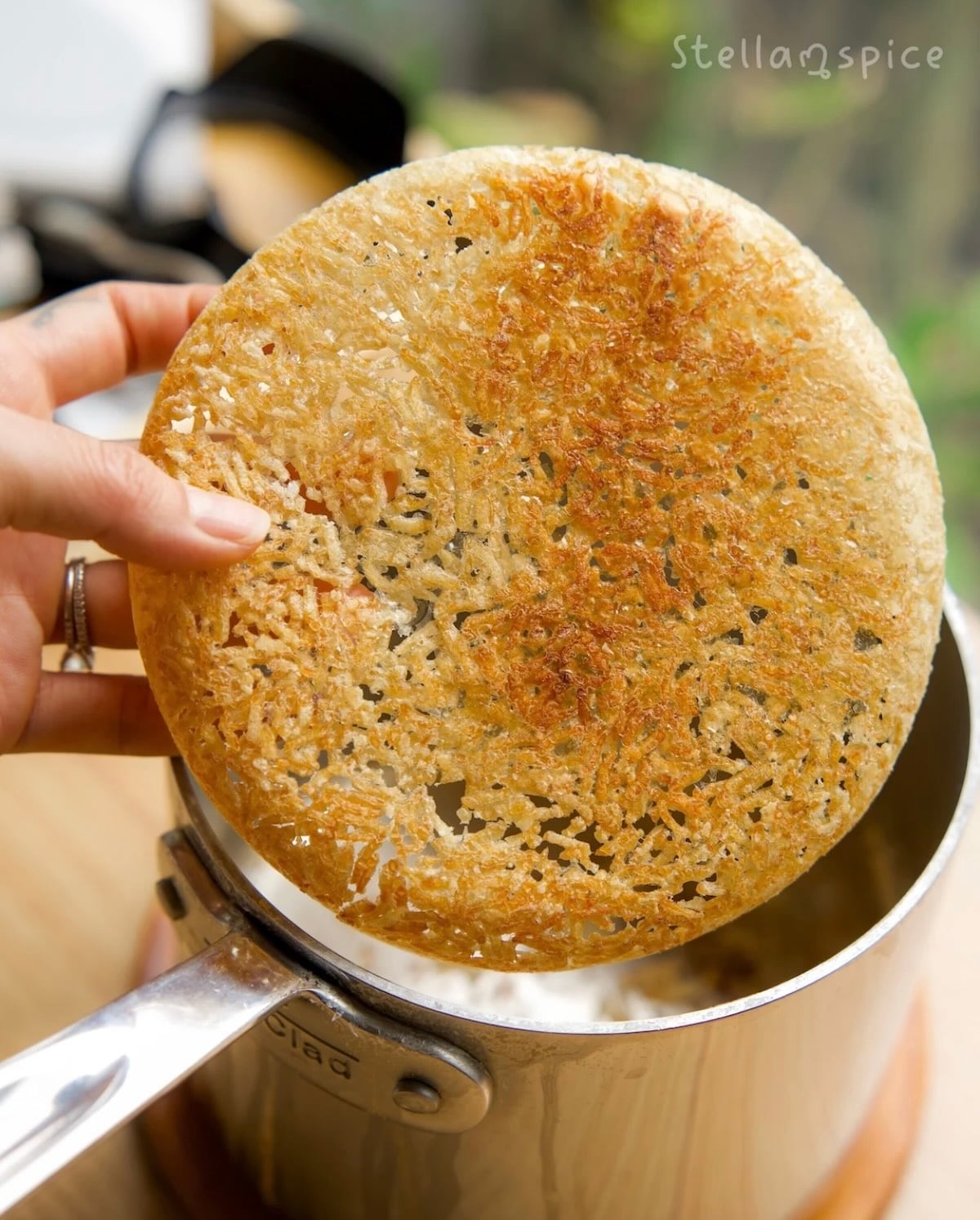
- Cook a standard pot of short-grain steamed rice. Remove the rice, leaving a thin, even layer pressed against the bottom of the pan. Toast it over medium-low heat for 10-15 minutes.
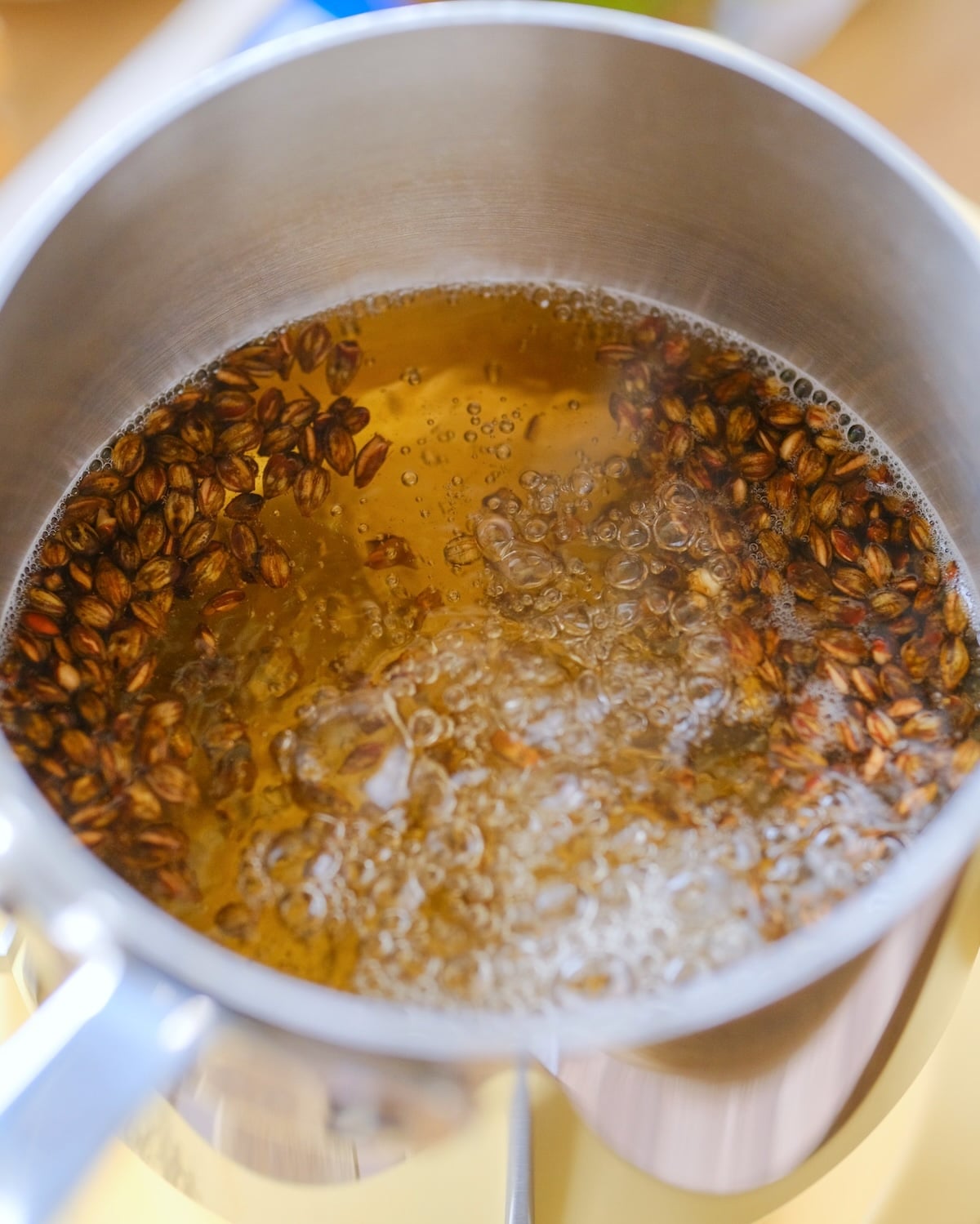
- Meanwhile, brew a strong batch of barley tea in a separate pot or kettle. Strain and discard the barley, and set the tea aside.
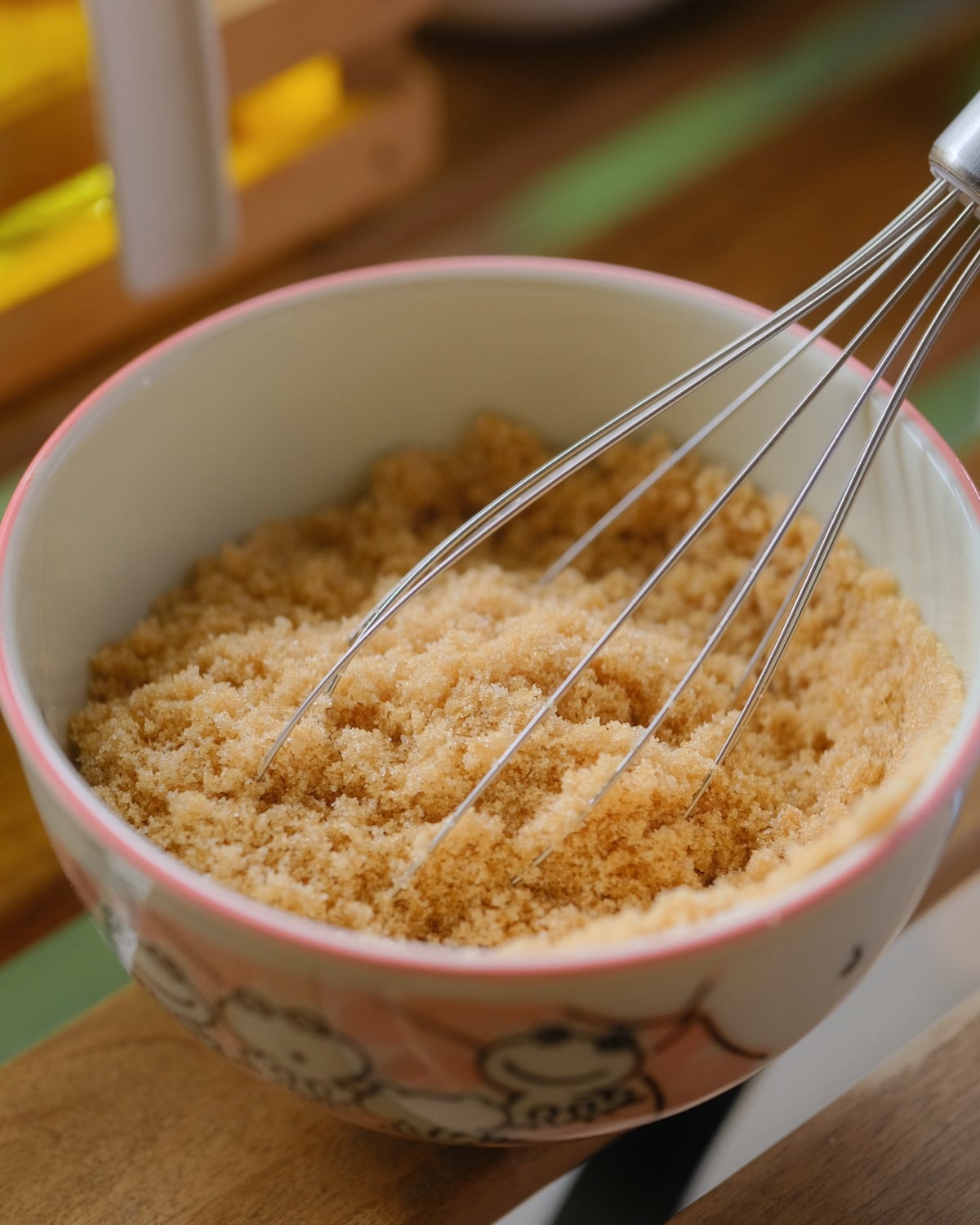
- Combine brown sugar, white sugar, and cellulose powder if using. Whisk vigorously, so the powder is well dispersed.
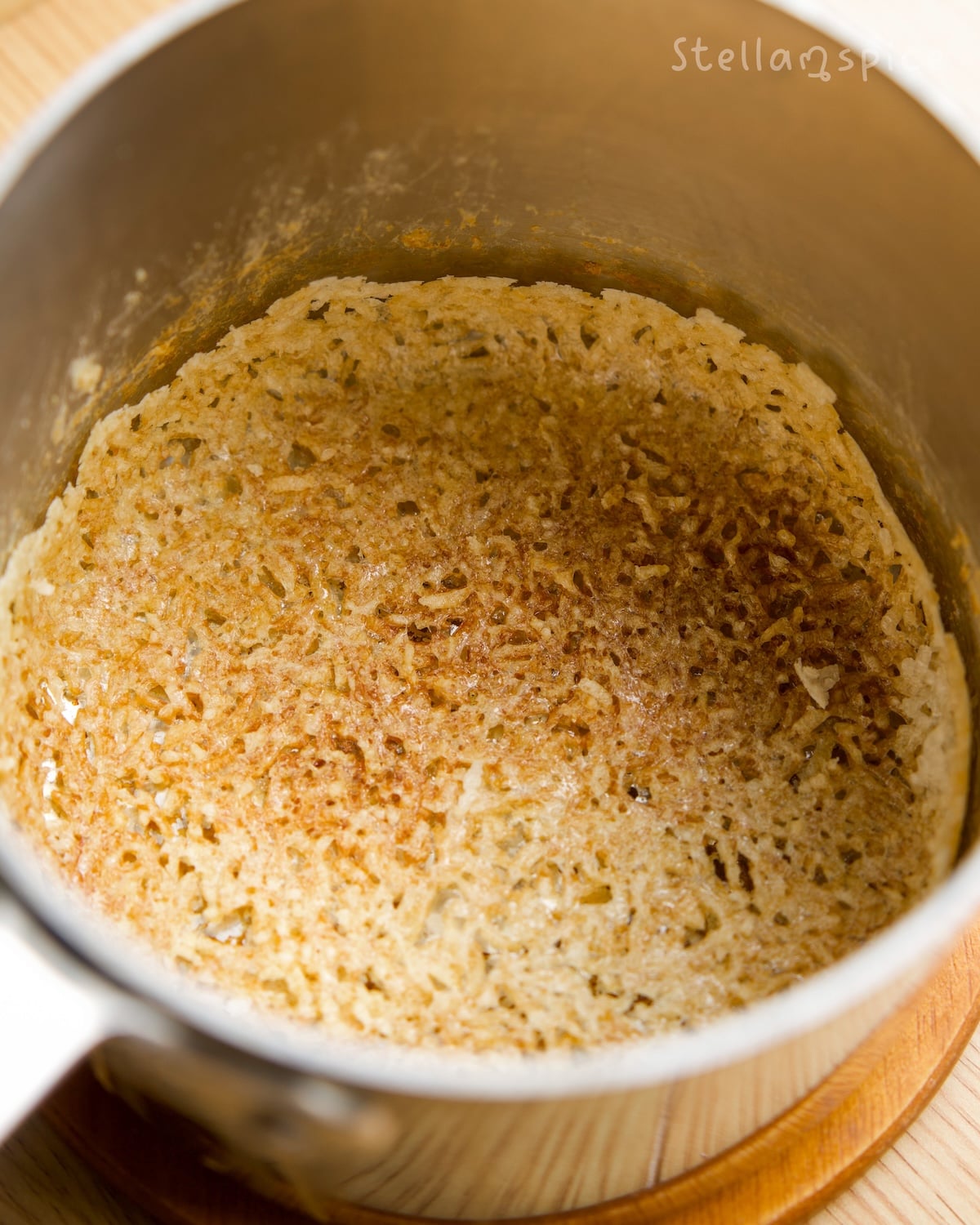
- The nurungji is done when it’s completely golden, crispy, and easily detaches from the pan.
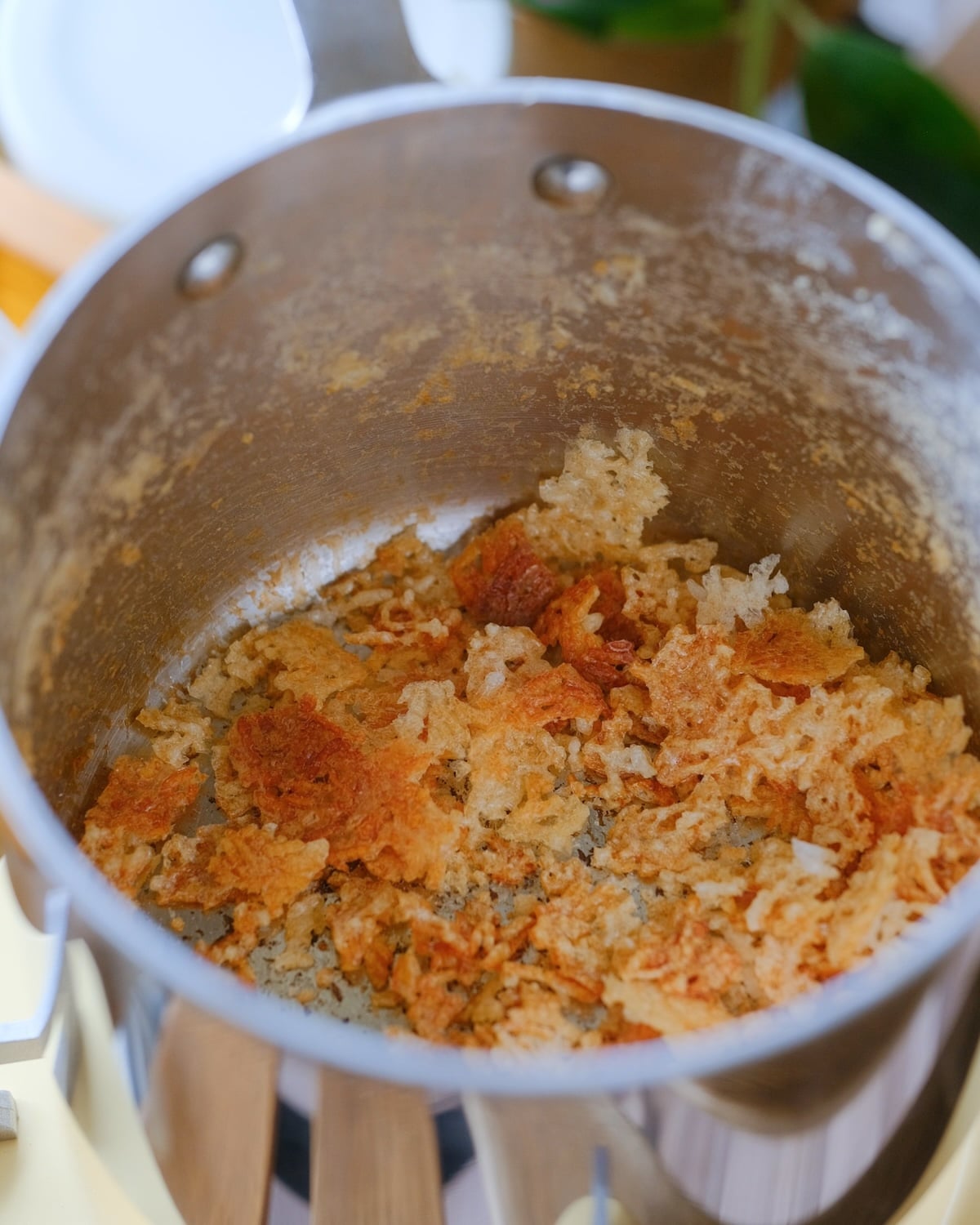
- Break it up into small pieces, and wash or wipe away any excess dried starch in the pot.
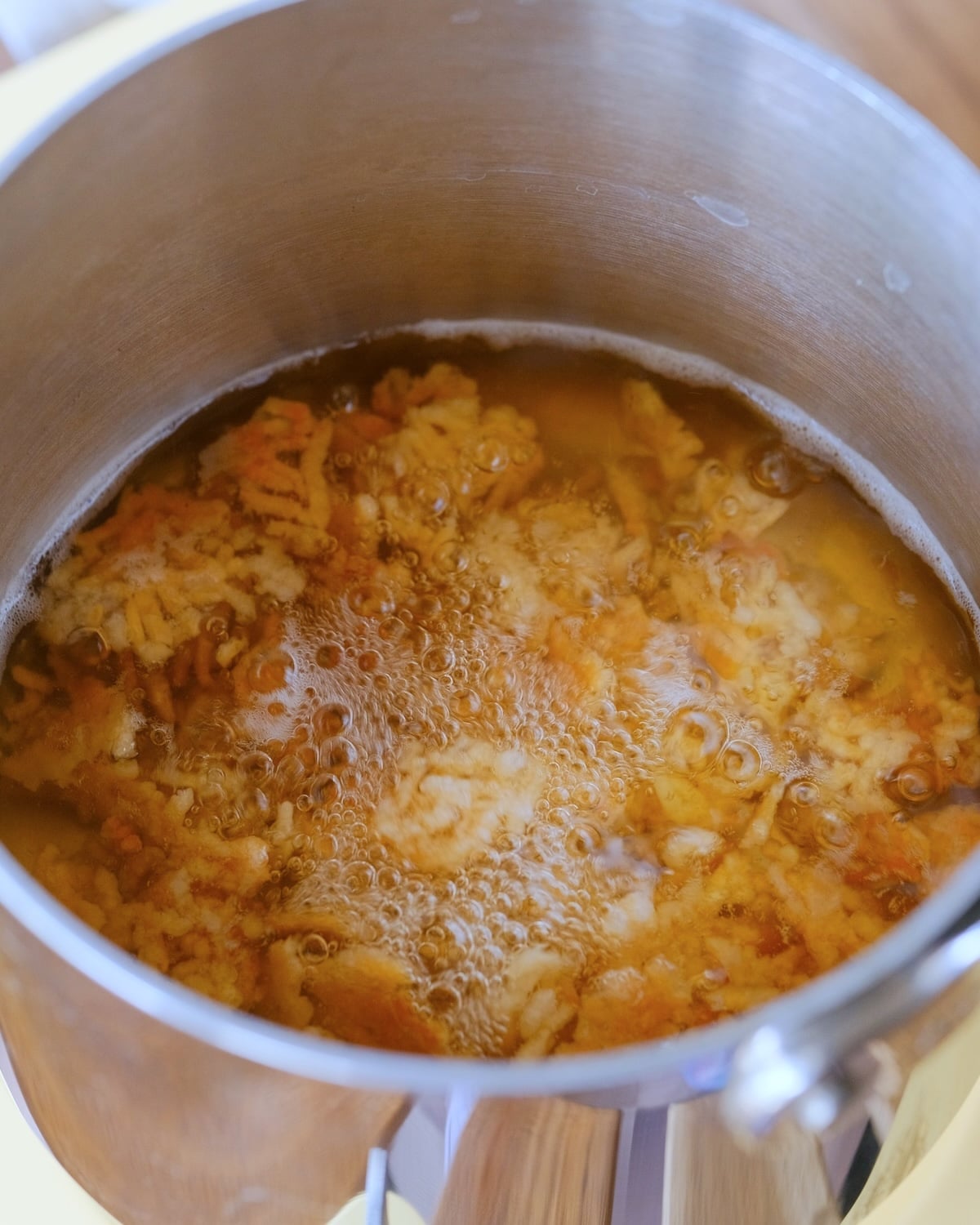
- Add the boricha, then slowly mix in the brown sugar mixture one spoonful at a time. Simmer over medium-low heat.
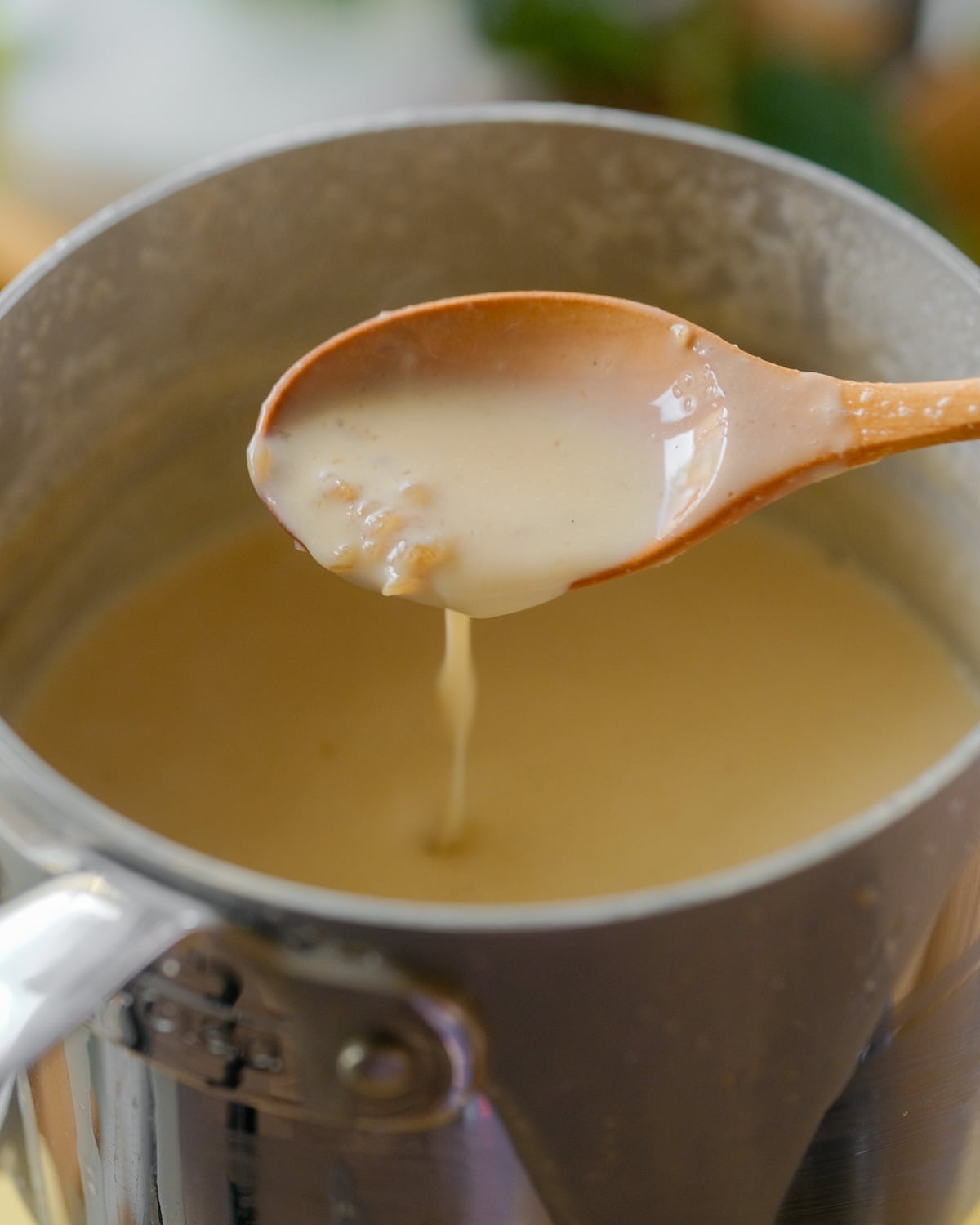
- Add the creams, salt, and vanilla extract. Continue to simmer over medium-low heat for no longer than 10 minutes.
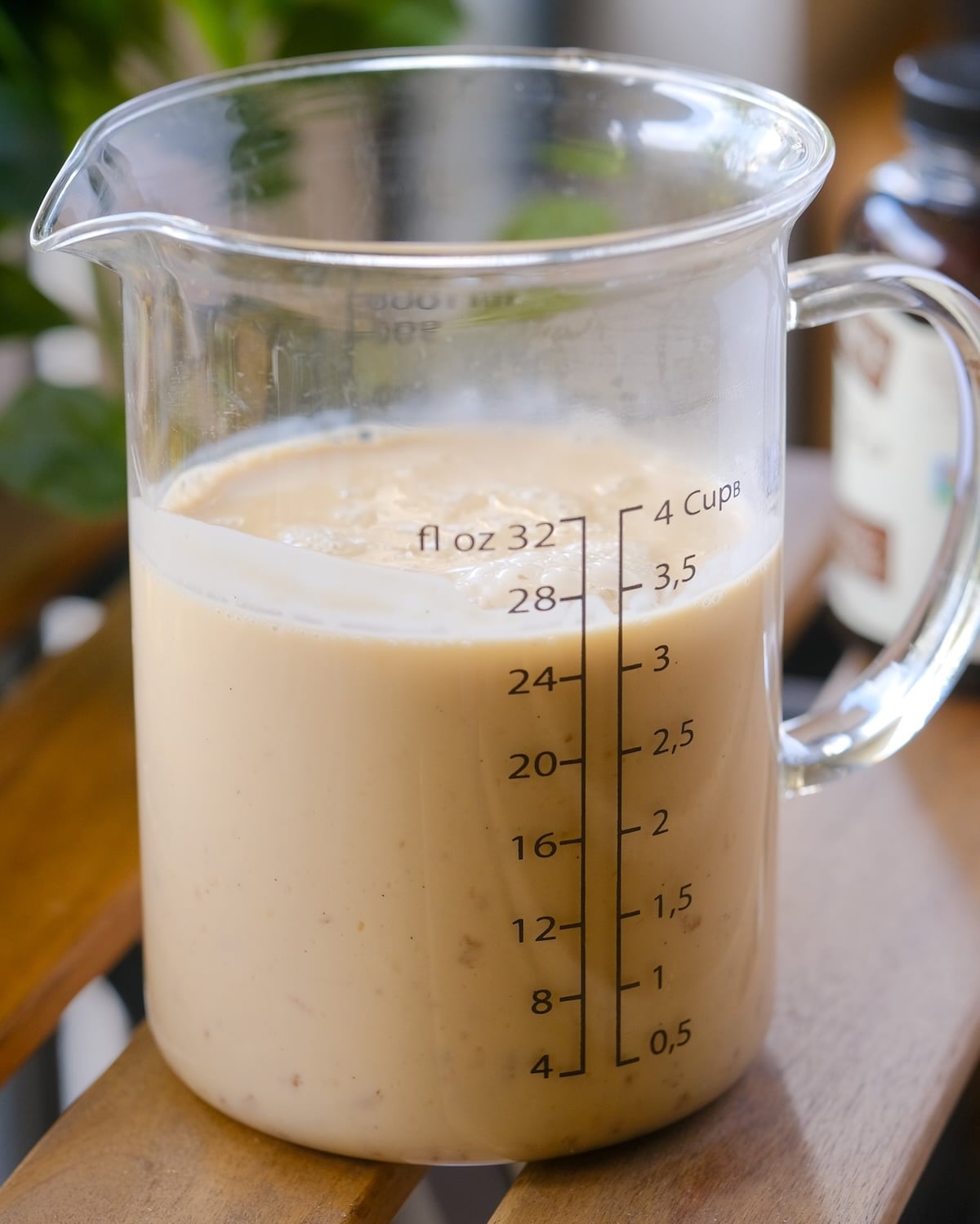
- Transfer to a pourable measuring glass and let it cool for 30 minutes to thicken. It should be just thick enough so the rice bits stay suspended.
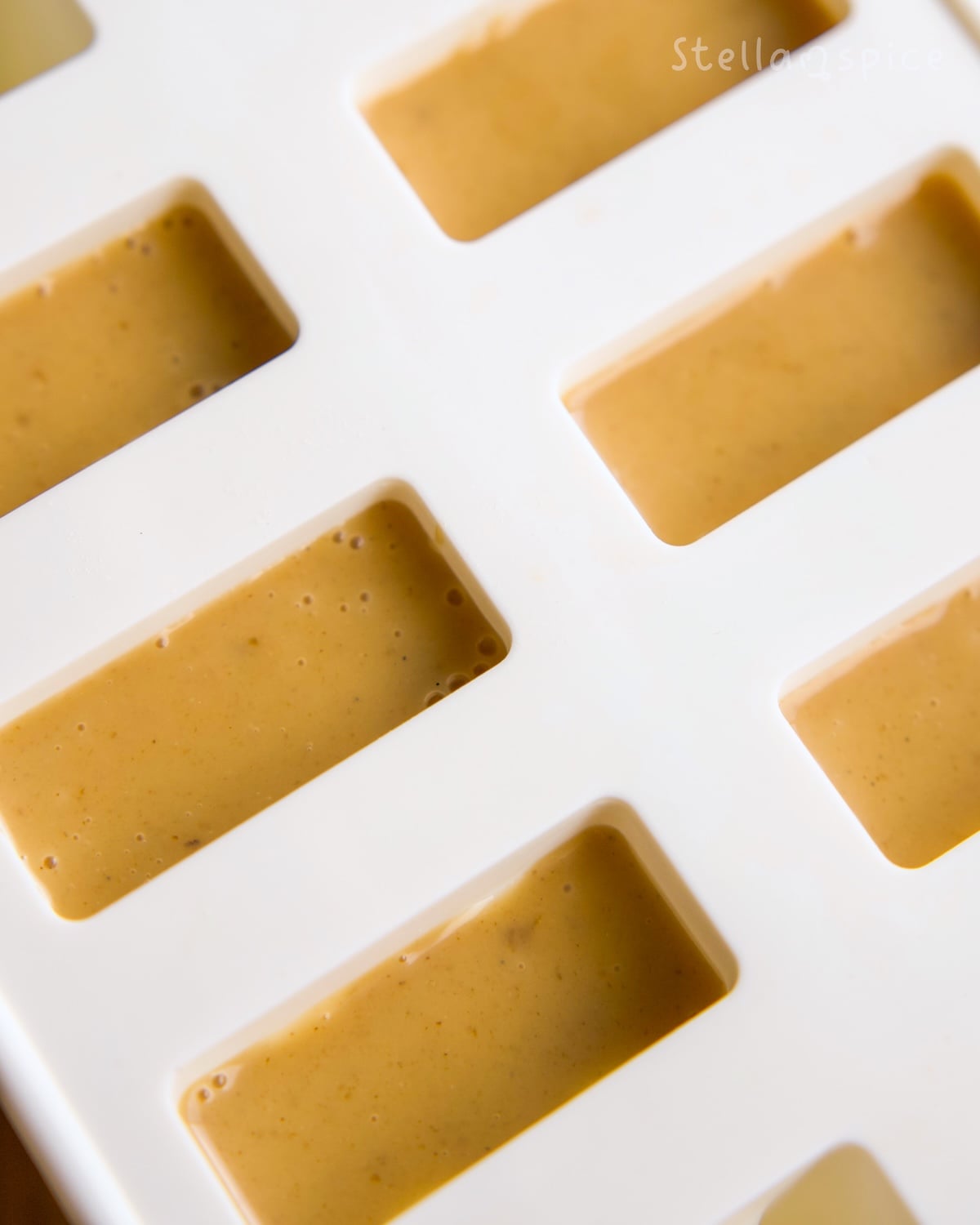
- Stir before pouring into a popsicle mold, so the rice bits are evenly dispersed. Push down the popsicle sticks about 3/4 of the way down and freeze for at least 8 hours.
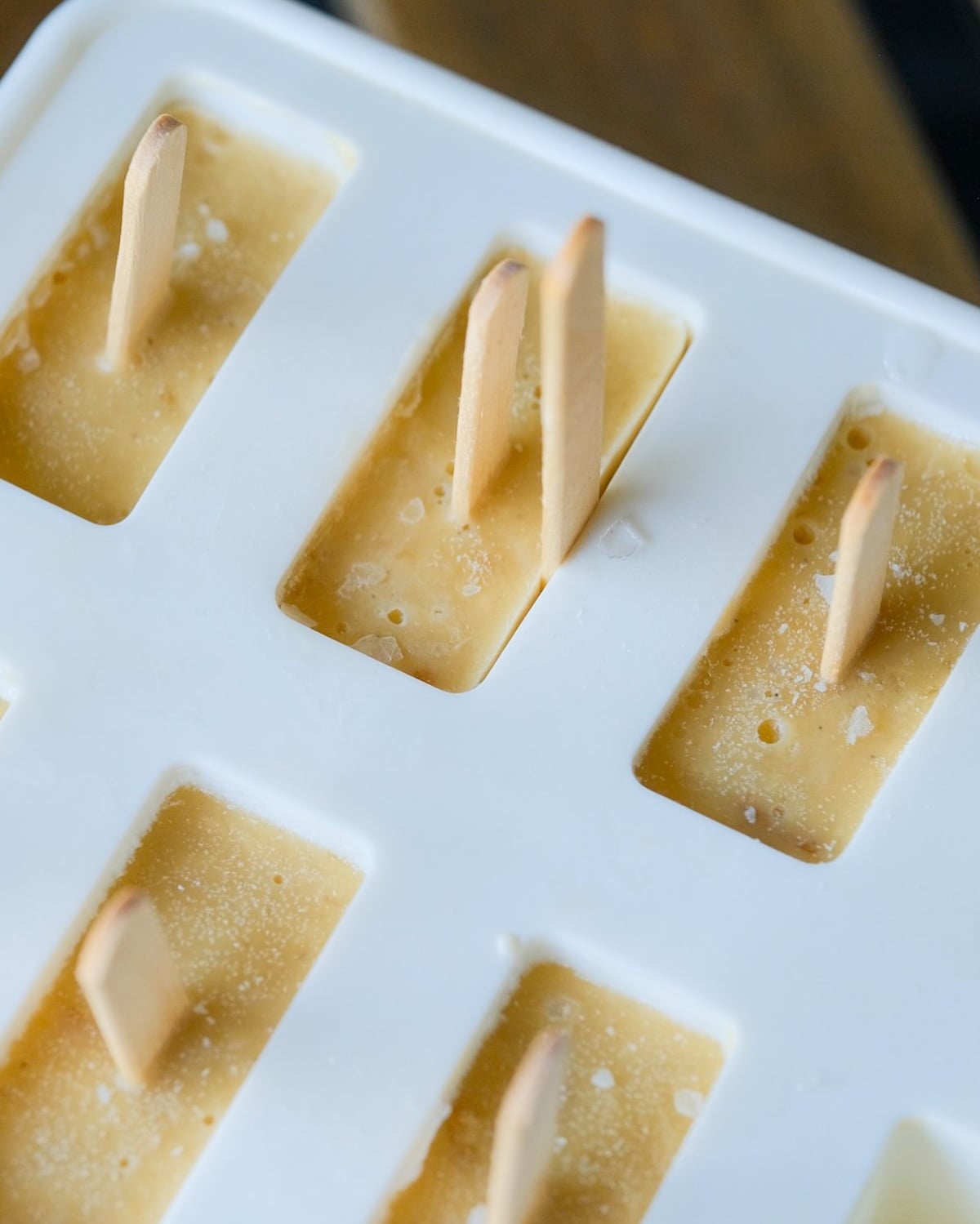
- To release the paletas, slide a popsicle stick down the sides to loosen them. Or, place the mold in warm water for 20 seconds.
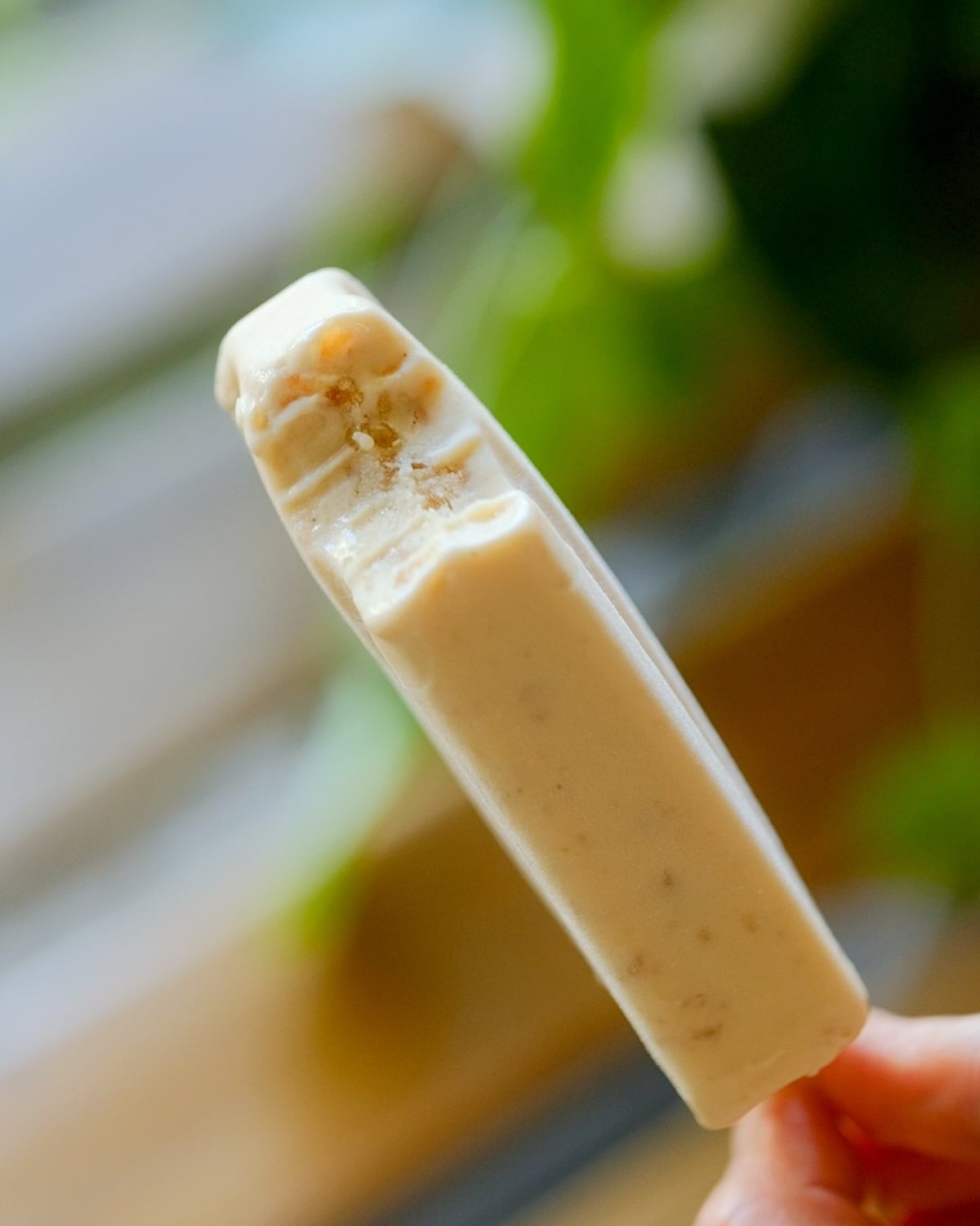
- Enjoy right away, or wait 5 minutes for it to soften slightly before eating.
Recipe Tips
Don’t Overcook the Cream Base: This is the most critical step. Watch your cream base and clock closely– if you cook the mixture too long, the rice will release too much starch, turning your creamy paleta into a gummy, slimy mess. You want it just thick enough to suspend the rice bits.
The Suspension Test: Before pouring the mix into your molds, stir it and see if the rice bits float evenly or immediately sink. If they sink, let the base cool a tiny bit more to help them hold their place.
Prep the Cellulose Powder First: Always whisk the cellulose powder into the dry sugars before adding it to any liquid. This ensures it dissolves evenly without turning into stubborn clumps.
Equipment needed:
To make paletas, you will need a popsicle mold, popsicle sticks, and plastic bags for storing. You will also need a blender.
I recommend a silicone popsicle mold because they are easier to remove the popsicles from. The exact one I have is no longer available on Amazon, but I found a similar one that you can purchase. It also comes with the popsicle sticks and baggies. Here is the link to purchase:
More Paleta Flavors
If you’re interested in more fusion paletas, you must try making my Patbingsoo Paletas! It’s a Korean red bean shaved ice paleta with fruit & mochi bits throughout– probably one of my favorite I have created so far.
My most popular paleta flavor is Creamy Strawberry Paletas.
Some other popular flavors are: Paletas de Coco (Creamy Coconut Popsicles), Paletas de Nuez (Pecan Ice Cream), or Paletas de Cafe (Coffee Ice Cream).
Frequently Asked Questions
You can, but I highly recommend using the split blend of both! The brown sugar provides that deep, caramelized flavor that mimics a brown sugar milk tea and beautifully complements the nutty notes of the boricha.
I used jasmine rice in one of my test batches, and it wasn’t as good but it worked. But I would refrain from using basmati rice since it has such a distinct, different flavor and aroma.
In Mexico, this is simply called crema or crema fresca. In US grocery stores, brands like Cacique label it “Crema Mexicana” or “Table Cream” to distinguish it from American sour cream. Unlike heavy cream, it is slightly cultured, giving it a velvety, pourable texture and a rich, buttery depth with just a hint of tang.
You can find it in the refrigerated dairy aisle of most major supermarkets (near the Mexican cheeses) or at any local Hispanic market. Look for brands like Cacique or El Mexicano.
I use this silicone popsicle mold that comes with popsicle sticks and some baggies for storing!
More Creamy Paletas
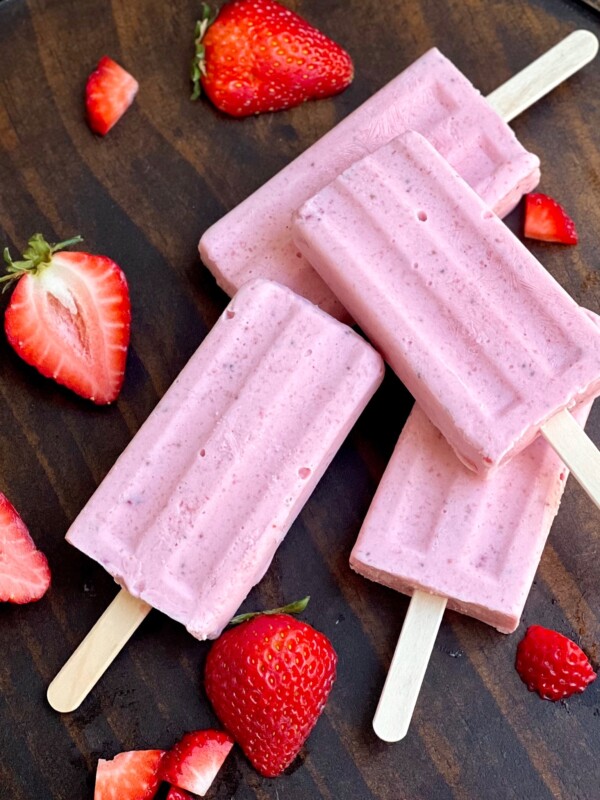
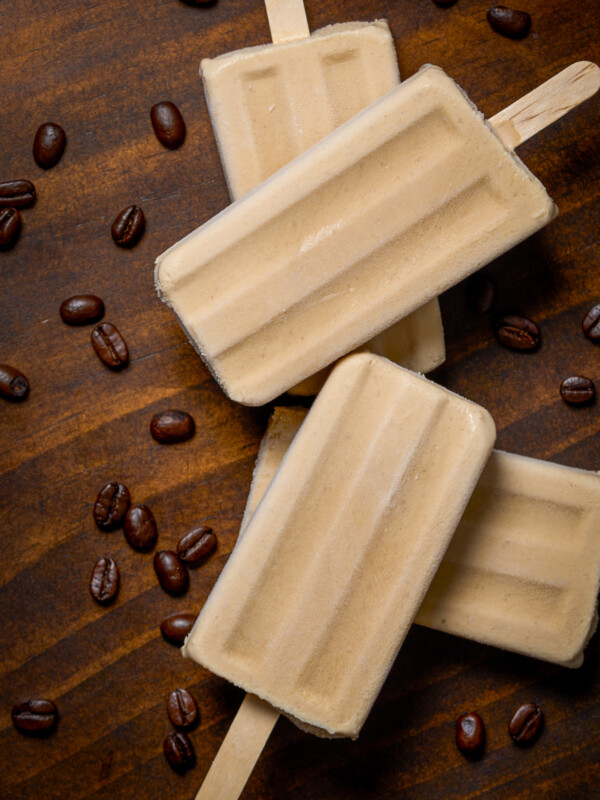
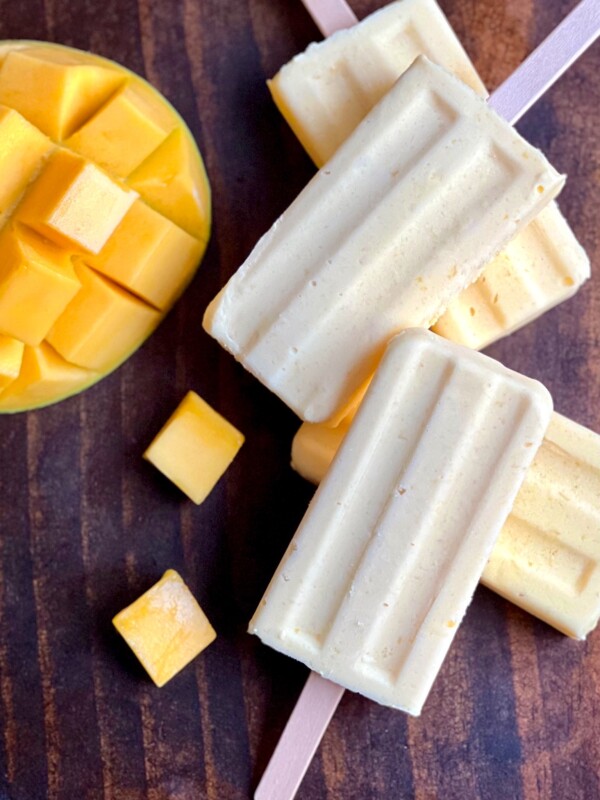
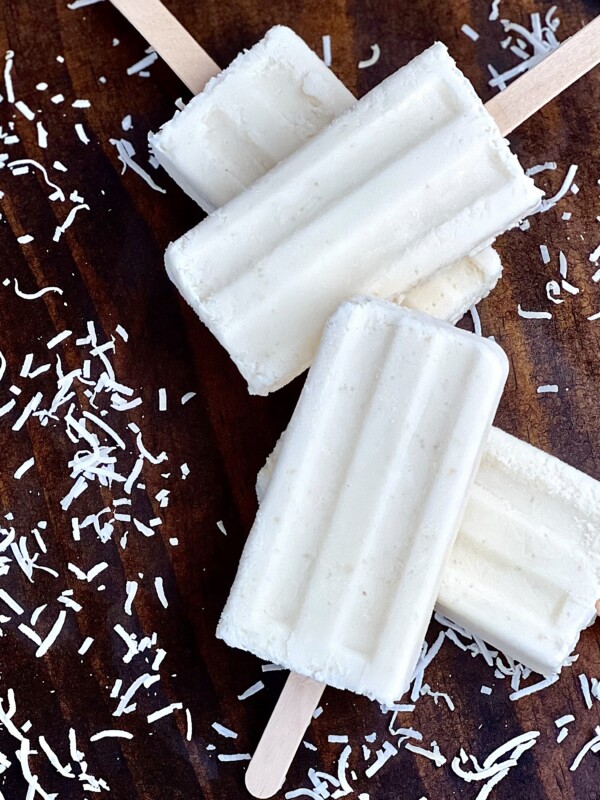
If you tried this Nurungji Paleta or any other recipe on my website, please leave a 🌟 star rating and let me know how it went in the comments below!
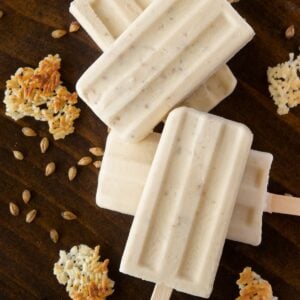
Nurungji Paletas (Toasted Rice Cream)
Equipment
- silicone popsicle mold
Ingredients
- 20 grams nurungji (toasted rice), about ¼ cup broken up
- 1½ cups boricha (barley tea), brewed strong
- 1 cup crema Mexicana, see recipe notes for substitutions
- 1 cup heavy cream
- ½ cup brown sugar
- ¼ cup white sugar
- ½ tsp vanilla bean paste, or extract
- ¼ tsp salt
- ¼ tsp cellulose gum, optional but recommended
Instructions
- Cook a standard pot of short-grain steamed rice. Remove the rice, leaving a thin, even layer pressed against the bottom of the pan. Toast it over medium-low heat for 10-15 minutes.
- Meanwhile, brew a strong batch of barley tea in a separate pot or kettle. Strain and discard the barley, and set the tea aside.
- Combine brown sugar, white sugar, and cellulose powder in a mixing bowl. Whisk vigorously, so the powder is well dispersed.
- The nurungji is done when it’s completely golden, crispy, and easily detaches from the pan. Break it up into small pieces, and wash or wipe away any excess dried starch in the pot.
- Add the boricha, then slowly mix in the brown sugar mixture one spoonful at a time. Bring to a simmer over medium-low heat.
- Add the creams, salt, and vanilla extract. Continue to simmer over medium-low heat for no longer than 10 minutes.
- Transfer to a pourable measuring glass and let it cool for 30 minutes to thicken. It should be just thick enough so the rice bits stay suspended.
- Stir before pouring into a popsicle mold, so the rice bits are evenly dispersed. Push down the popsicle sticks about 3/4 of the way down and freeze for at least 8 hours.
- To release the paletas, slide a popsicle stick down the sides to loosen them. Or, place the mold in warm water for 20 seconds.
- Enjoy right away, or wait 5 minutes for it to soften slightly before eating.
Notes
-
Crema Mexicana: In Mexico, this is simply called crema. Do not substitute it with regular sour cream (crema agria), as the high acidity will ruin the barley tea flavor.
- Best Substitutes: Use a 50/50 mix of heavy cream and crème fraîche, OR a ratio of ¾ cup heavy cream to ¼ cup whole milk.
- Watch the Simmer: Keep the heat low, gentle, and don’t cook for too long. The more you cook it, the more starch is released into the cream base, potentially making it very slimy and gummy.
- Texture Stabilizers (Optional): The starches from the short-grain rice act as a natural stabilizer to keep the paletas relatively creamy on their own. However, if you plan to store them long-term, a tiny pinch of cellulose gum or guar gum provides extra insurance against ice crystals. Avoid xanthan gum, as it can make the dairy base feel slick.
- Storage & Shelf Life: Once frozen solid, unmold the paletas and wrap them individually, then store them in an airtight container. They will stay perfectly creamy and freezer-burn free for up to 1 month.
Nutrition
Nutrition information is automatically calculated, so should only be used as an approximation.