

This post may contain affiliate links. Please see our disclosure policy.
Tender, juicy Bulgogi made with thinly sliced beef in an authentic sweet-savory Korean BBQ marinade. Perfect with a bowl of steamed rice, ssamjang dipping sauce, and lettuce wraps!

Bulgogi is a dish that I love to make and eat, but would never order at a restaurant! Why? Because it’s SO easy to make at home, and honestly… there are better things to order if you’re going out to eat at a Korean restaurant, especially if you are exploring Korean food.
I remember eating a lot of bulgogi growing up. As we got older, we graduated to Dwaeji Bulgogi (Spicy Pork BBQ), which is one of my favorite dishes today! My mom would made a super big batch of it, and it would last us a few days. We usually ate it with steamed rice and banchan (Korean side dishes), and I never got sick of these meals! Bulgogi is very popular with children.
Why You’ll Love This Recipe
- Excellent for meal prepping – bulgogi tastes even better over time, freezes beautifully, and is quick to cook.
- Quick & easy – ready in 30 minutes or less, this dish is perfect for weeknight dinners or a fast lunch.
- Versatile – you can use it in rice bowl, lettuce wraps, sandwiches, bibimbap, or even tacos!
What is Bulgogi?
Bulgogi (불고기) literally means “fire meat” in Korean. It’s traditionally grilled over an open flame, and made with thinly sliced beef marinated in a sweet-savory mix of soy sauce, sesame oil, garlic, sugar, and Asian pear.
This is usually most peoples’ introduction to Korean food, and for good reason! It’s such a delicious and comforting dish that really hits the spot, especially with some rice. But my favorite way to enjoy any kind of Korean grilled meat, is as ssam (쌈). It’s the Korean way! Ssam means “wrap” – it refers to wrapping grilled meat in leafy greens like lettuce and perilla.
Ingredients in Bulgogi:

Please see the recipe card for a full list of ingredients and measurements!
- Beef – I prefer thinly sliced chuck eye roll as it’s well-marbled and affordable compared to more traditional cuts like ribeye. Any beef you prefer is fine, as long as it’s thinly sliced and has at least a little fat!
- Soy sauce – I always use Korean soy sauce for Korean recipes. The brand I use is Sempio #501 for any cooked dishes containing soy sauce.
- Brown sugar or honey– Bulgogi is supposed to be a sweet & savory dish. Sugar balances the salt, you definitely don’t want to skip this but you can reduce or increase the amount to suit your taste.
- Sesame oil – Adds a nutty aroma and rich depth that makes bulgogi taste authentically Korean.
- Asian pear/onion/garlic– Blend these into a smooth puree. Some recipes call for straining it through cheesecloth for a cleaner sauce, but it’s not necessary. The pulp adds extra flavor and body, and it all cooks down beautifully in the pan. If you’re grilling over high heat, you can strain it to avoid burning, but it’s totally optional.
- Rice wine – Optional, but recommended! A splash of rice wine adds mild sweetness and aroma while helping to neutralize any strong beefy or gamey notes. It’s more of a modern addition to bulgogi marinades rather than a traditional one, but it subtly enhances flavor and balance.
How to Make Bulgogi

- Thinly slice your beef if it isn’t sliced already. Freezing it for 1 hour helps!

- Combine garlic, onion, Asian pear and water to blend into a puree.

- Combine the puree with soy sauce, brown sugar, sesame oil, and pepper. Optional: add mirin and a pinch of msg.

- Marinade the thinly sliced beef, sliced onion, & green onion in the sauce.

- Over medium high heat, cook the marinated beef on a cast iron skillet or griddle.

- Optional: preheat a sizzling skillet to serve. Once the beef is cooked through, finish on a sizzling skillet to serve.

- Top with sliced green onion and sesame seeds, serve and enjoy with steamed white rice, ssamjang (Kbbq dipping sauce), and lettuce wraps!
Recipe Tips
- If you’re slicing your own beef, pop it in the freezer for about an hour first. When it’s slightly firm but not frozen solid, it’s much easier to make thin, even slices. Aim for about ⅛ inch (3 mm) thin.
- Marinating time depends on your cut, slice thickness, and schedule.
I love using chuck eye roll because it’s tender and flavorful enough that it doesn’t really need to marinate- you can cook it right after mixing.
Leaner cuts like brisket, though, benefit from at least 30 minutes in the marinade (an hour is even better). - Don’t crowd the pan. If you want restaurant-style bulgogi, cook in small batches over medium-high heat so the beef sears instead of steaming.
- Optional: finish on a preheated sizzling skillet.
I’ll be honest, I use this method mostly because I’m too lazy to cook in batches (yes, I know I just told you not to crowd the pan 😅).
Instead, I cook all the bulgogi at once in a cast iron skillet, then transfer it to a sizzling hot plate to recreate that caramelized, char-grilled flavor and restaurant-style presentation.
Best Cuts of Beef For Bulgogi
When it comes to bulgogi, the key isn’t just the cut of beef you choose! It’s how you slice and prepare it, as well as what suits your personal taste. Any cut with a bit of marbling will work beautifully as long as it’s thinly sliced against the grain. If you already have a favorite cut of beef, use it!
Here are some of the most common and best options for bulgogi, including my go-to:
Ribeye– The most traditional and popular choice for bulgogi. Ribeye is well-marbled, tender, and full of flavor- perfect for juicy, melt-in-your-mouth texture. Choose this cut if you want a premium bulgogi experience.
Top Sirloin– A slightly leaner and more budget-friendly option than ribeye. It still delivers great flavor and tenderness, making it an excellent choice.
Chuck Eye Roll– This is my recommendation. Chuck eye roll is rich, juicy, well-marbled, and usually more affordable than ribeye or top sirloin. A bonus: H Mart often sells it pre-sliced specifically for bulgogi, saving you time and effort.
Brisket– If you prefer a leaner cut or want a heartier texture, brisket is a great option. Just keep in mind that it will need to marinade longer to help tenderize the meat and enhance flavor.

Serving Suggestions
Bulgogi pairs beautifully with a variety of sides to make a complete, traditional Korean meal. Here are some of my suggestions:
Rice: Serve alongside Korean purple rice or steamed white rice to soak up every bit of the sauce.
Soup: Koreans almost always have soup with their meal as well. A light soup like miyeok guk (Korean seaweed soup) is easy to prepare, nutritious, and so good with bulgogi & rice!
Ssam (Lettuce Wraps): My favorite way to eat bulgogi! For ssam, you need red or green leaf lettuce, ssamjang (kbbq dipping paste), perilla leaves, and jalapeno (although not traditional, I prefer jalapeno over Korean peppers. Trust me!)
Pickled sides: Add a punch of flavor and crunch with my bok choy muchim or spicy cucumber salad . These tangy, slightly spicy sides complement the sweet-savory bulgogi perfectly!
Other Banchan: Kimchi, of course! Try my family’s famous kkakdugi (radish kimchi) recipe. I also love gochu ssamjang muchim (seasoned Korean peppers) with basically any Korean dish.
Bibimbap: If you’ve got any banchan in the fridge that needs to be cleaned out, it’s the perfect opportunity to make bibimbap! Bibimbap (Korean Mixed Rice Bowl) literally means “mixed rice” and is made with banchan like seasoned spinach, seasoned bean sprouts, stir fried zucchini, and pickled cucumbers. It’s usually topped with a fried egg and a sweet & tangy gochujang sauce.

Frequently Asked Questions (FAQ)
Yes! While Korean pear adds subtle sweetness and helps tenderize, you can substitute with apple, kiwi, or a splash of pineapple juice. Or skip it entirely and adjust the sweetness with a bit more sugar or mirin.
The best cuts for bulgogi are ribeye, top sirloin, chuck eye roll, or brisket. Anything tender with a bit of marbling. Ribeye is the most traditional, but chuck eye roll is a great budget-friendly choice that stays juicy and flavorful when thinly sliced.
No! Overnight marinating can make the beef mushy if you’re using kiwi or pineapple as tenderizers.
Because the beef is very thinly sliced, it absorbs flavor quickly. A 30-minute marinade is usually plenty for tender cuts like ribeye or top sirloin.
For chuck eye roll, I often cook it right away and it’s still delicious.
Leaner cuts (like brisket) benefit from a longer soak- around 2 to 4 hours for the best texture and flavor.
Keep in mind: if your slices are on the thicker side, you’ll want to extend the marinating time a bit to let the flavors fully penetrate.
Yes! Bulgogi is perfect for meal prep. You can store cooked bulgogi in the refrigerator for up to 4–5 days or freeze it for up to 2–3 months.
To save even more time, freeze the uncooked marinated beef in portions, and thaw overnight before cooking.
Yes! Both chicken and pork taste amazing in this marinade.
For chicken, use boneless thighs for the best flavor and tenderness. Marinate for at least 30 minutes (longer if you have time).
For pork, go with thinly sliced pork butt, shoulder, or bell. The fat helps it stay juicy and caramelize beautifully.
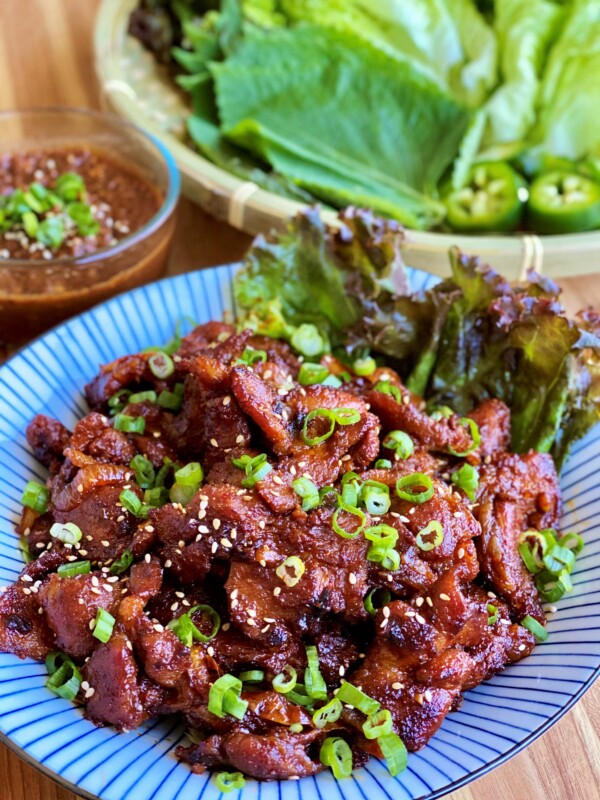
If you’re craving something spicy, check out my 15-minute dwaeji bulgogi (spicy pork) recipe! You can use this marinade for chicken as well.
Nope! Some recipes call for straining the blended pear, onion, and garlic puree for a smoother bulgogi sauce, but it’s not necessary. Keeping the pulp adds more flavor, natural sweetness, and helps the marinade cling to the beef. The bits cook down and caramelize nicely in the pan. If you’re grilling over high heat, straining can help prevent the pulp from burning. Otherwise, skip it and save yourself the extra step!
More easy 20-Minute meals

If you tried this Bulgogi recipe or any other recipe on my website, please leave a 🌟 star rating and let me know how it went in the comments below!

Bulgogi- Authentic Korean BBQ Beef Recipe
Ingredients
- 1 lb chuck eye roll, see notes for other options
- ½ onion, sliced
- 2 green onion, chopped
- 1 tsp sesame seeds
Bulgogi marinade
- 2 tbsp soy sauce
- 3 tbsp water
- 2 tbsp brown sugar
- 2 tbsp Asian pear puree
- 2 tbsp onion puree
- 1 tbsp rice wine, optional
- 3 garlic cloves
- ½ tsp black pepper
- 1 tsp sesame oil
Instructions
- If your beef isn't sliced already, you'll need to slice it very thinly. Aim for ⅛ inch thin. It's easier to slice evenly if you partially freeze it for 1 hour.
- Cut about 2 tablespoons each of Asian pear and onion. Combine with 3 tablespoons of water and 3 garlic cloves in a blender, then blend into a smooth puree. Straining isn’t necessary, but you can do it if you prefer a cleaner sauce.No blender? Grate the pear, onion, and garlic into a bowl instead. Don't forget to add the water — it helps prevent the beef and marinade from burning as they cook.
- In a bowl, combine the puree with soy sauce, brown sugar, rice wine, black pepper, and sesame oil. Mix well to combine.
- Add the thinly sliced beef to the marinade, making sure each piece is evenly coated. Mix in the sliced onion and green onion.
- Marinating time depends on the cut of beef, how thinly it’s sliced, and how much time you have.If you’re using very thin, well-marbled beef (like ribeye or chuck eye roll), you can cook it right away – the flavor develops quickly. For a slightly deeper taste, marinate for 30 minutes to 1 hour.If your slices are thicker or you’re using a leaner cut (like brisket or top sirloin), marinate for at least 30 minutes, and up to 1 hour for the best results.Note: With thin, well-marbled beef, a longer marination makes only a subtle difference – so don’t stress if you’re short on time!
- Heat a cast iron skillet or griddle over medium-high heat. For restaurant-style bulgogi, cook the beef in small batches so the pan isn’t overcrowded. This helps it sear instead of steam. For a home-style version, you can add everything at once and let it cook together.Restaurant-style → juicy and nicely browned.Home-style → saucier, tender, and easy.
- Cook the beef for 2–3 minutes per side, or until it’s nicely browned and cooked through but still tender.
- Optional: Transfer the cooked bulgogi to a preheated sizzling hot plate. This is my favorite way to enjoy it at home! I usually cook everything at once (the home-style method), and while it’s cooking, I preheat the hot plate. When the beef is almost done, I move it over and toss it briefly to get those delicious char-grilled edges and that restaurant-style flavor.
- Sprinkle with sliced green onions and toasted sesame seeds.
- Serve immediately with steamed rice, fresh lettuce or perilla leaves, ssamjang, and sliced jalapeños!
Notes
- Beef options: Ribeye (classic and tender), top sirloin (leaner but still flavorful), chuck eye roll (my favorite- great marbling and affordable!), or brisket (lean, so give it a longer marinade). Just make sure it’s sliced nice and thin!
- Marinating time: Because the beef is thinly sliced, you don’t need to marinate overnight. 30 minutes is more than plenty for tender cuts; 1–2 hours for thicker or leaner ones.
- Storing/Freezing: Bulgogi keeps well for meal prep! Store cooked bulgogi in an airtight container in the fridge up to 4-5 days. You can also freeze it cooked or uncooked and store for up to 3 months. Thaw in the fridge overnight before reheating/cooking.
Nutrition
Nutrition information is automatically calculated, so should only be used as an approximation.








This was my first time making bulgogi and it was excellent. My only qualm is that it needed more liquid for the end product and I didn’t know how to do that while also charring the meat.
This recipe was 10/10 and you continue to be one of my favorite creators.