

This post may contain affiliate links. Please see our disclosure policy.
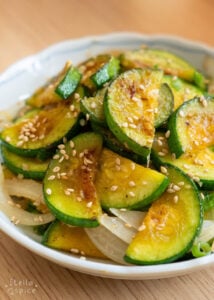
This Hobak Bokkeum is a classic Korean Stir Fried Zucchini banchan (side dish) that is simply seasoned with salt, pepper, and sesame oil, letting the natural sweetness from Korean zucchini shine. If you like my Hobak Jeon (Zucchini Fritters), you’ll love this!

Hobak Bokkeum isn’t a fancy or complicated dish, but it’s one of my favorite Korean banchan (side dishes) ever! It’s the kind of recipe that’s effortless and incredibly comforting.
Lately, I’ve been craving vegetables more than ever. I guess I’m getting up there in age, because I’ve started to prefer food that is simply seasoned, letting the natural flavors shine instead of using bold seasonings.
But don’t get it twisted! This is still a delicious and flavorful side dish. It caught me by surprise the first time my mom made it, and I think it will do the same for you. It’s because it uses a special type of zucchini, which I will talk about later.
Why You’ll Love This Recipe
- Quick, simple, and great way to get your vegetables in.
- Lightly seasoned so the natural Korean zucchini flavor stands out.
- Leftovers can be used to make Bibimbap (Korean Mixed Rice Bowl)!
What is Hobak Bokkeum?
Hobak (호박) is squash and Bokkeum (볶음) means “stir-fried.” It’s made with tender ae-hobak (애호박), which is a Korean summer squash, similar to zucchini but sweeter and way better! Commercially sold ae-hobak usually comes wrapped in a thin plastic tube, and I recently learned that it’s actually grown in that tube! Thats how it gets its uniform, cylindrical shape.
The natural sweetness from ae-hobak is unlike any vegetable I have ever tasted – it’s truly so delicious that it requires very little seasoning to make hobak bokkeum super flavorful. It’s also frequently used in soups and stews. One of my favorite ways to use it is for Soondubu Chigae (Soft Tofu Stew)!
Ingredients in Hobak Bokkeum:
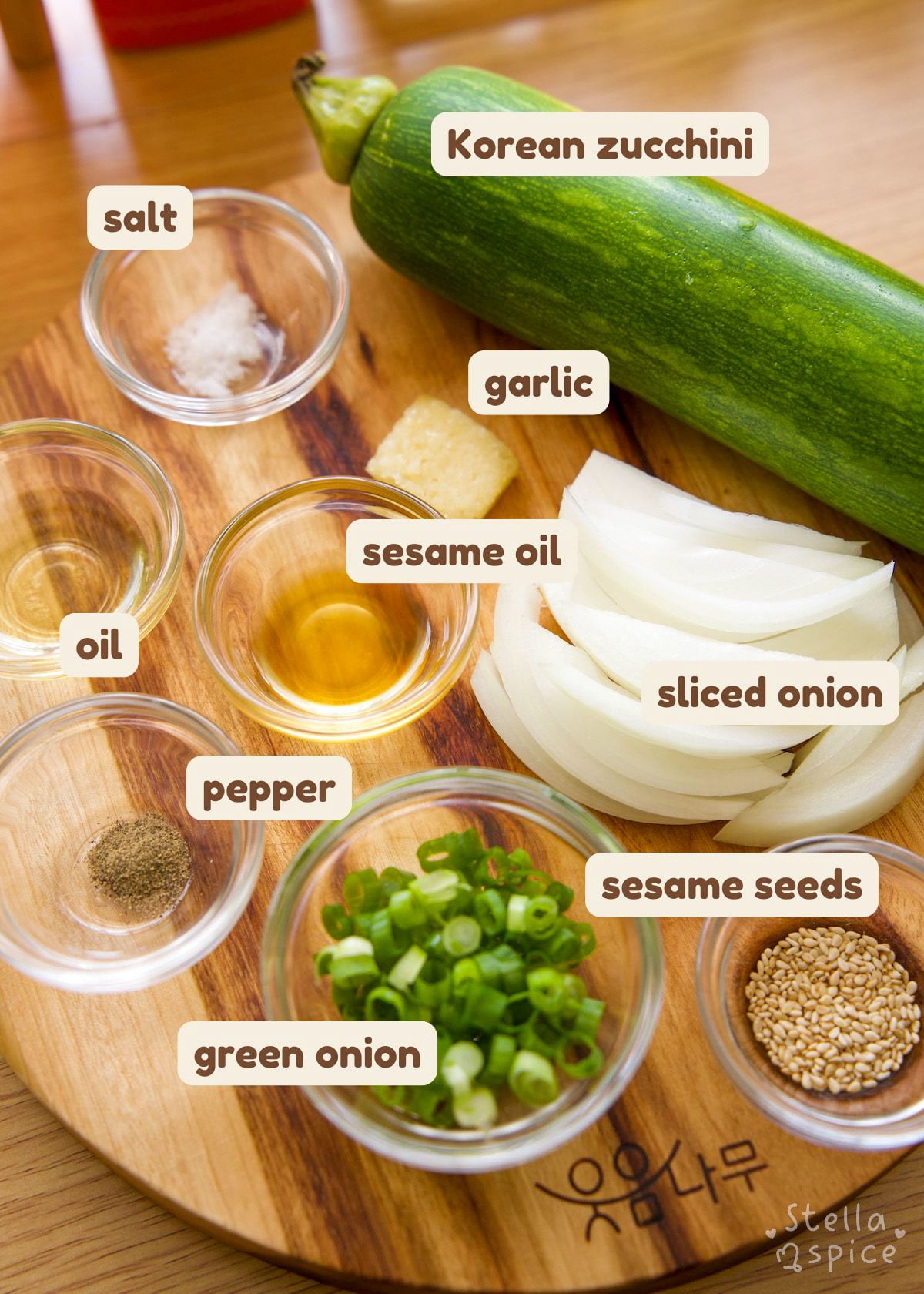
Please see the recipe card for a full list of ingredients and measurements!
- Ae hobak– Korean summer zucchini is highly recommended for this! You can use regular zucchini, but it may need more help with seasoning.
- Onion – Adds sweetness, depth, and texture contrast.
- Garlic – A necessary flavor booster. I use pre-processed frozen garlic since I use so much of it, but fresh is always better of course.
- Salt & pepper– to enhance and bring out the natural flavor of ae hobak.
- Oils – You’ll need a neutral oil for stir-frying, and sesame oil to finish for flavor.
- Garnish– Toasted sesame seeds and chopped green onion.
Step by Step Instructions
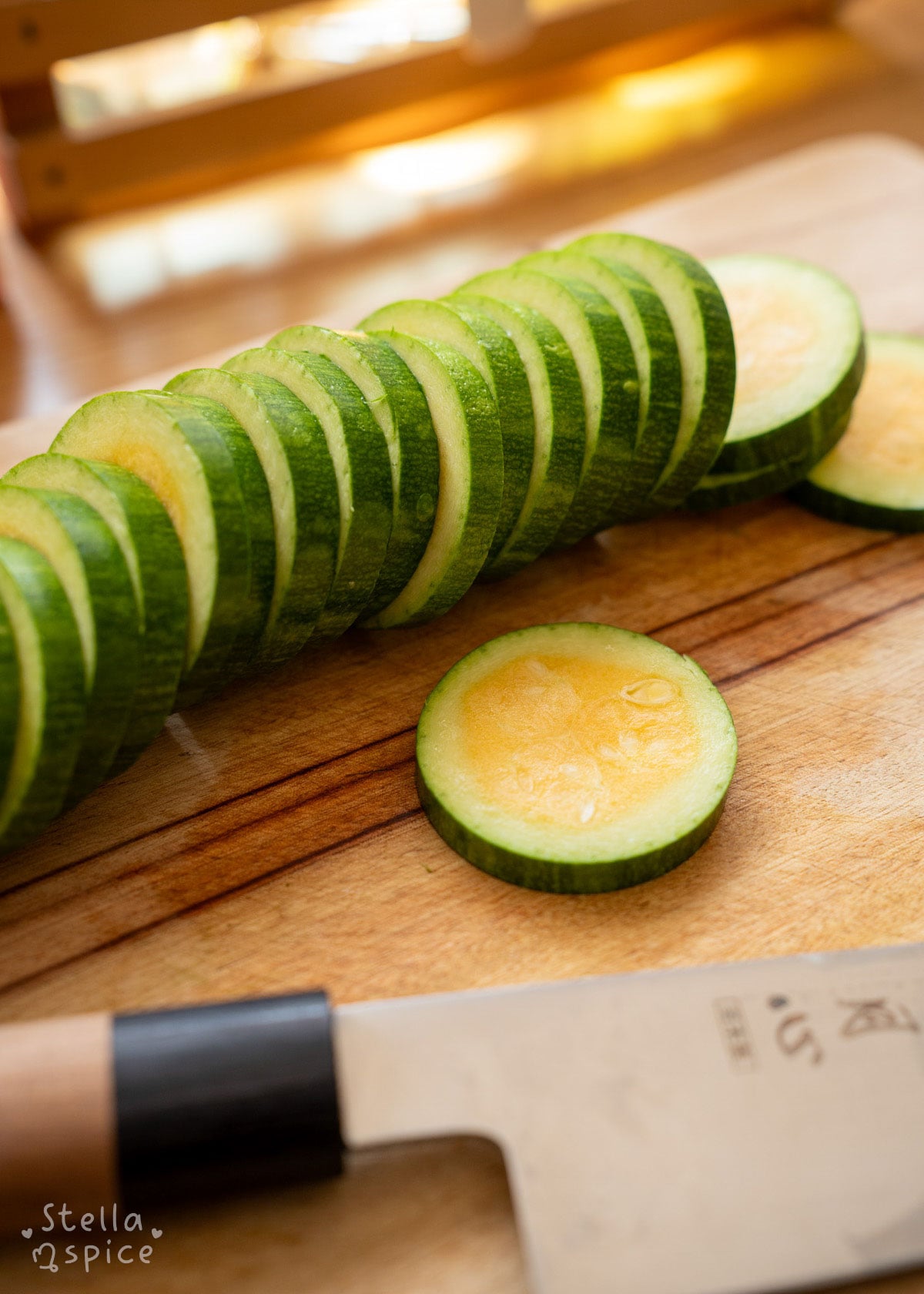
- Wash and cut the zucchini into ⅓ inch rounds.
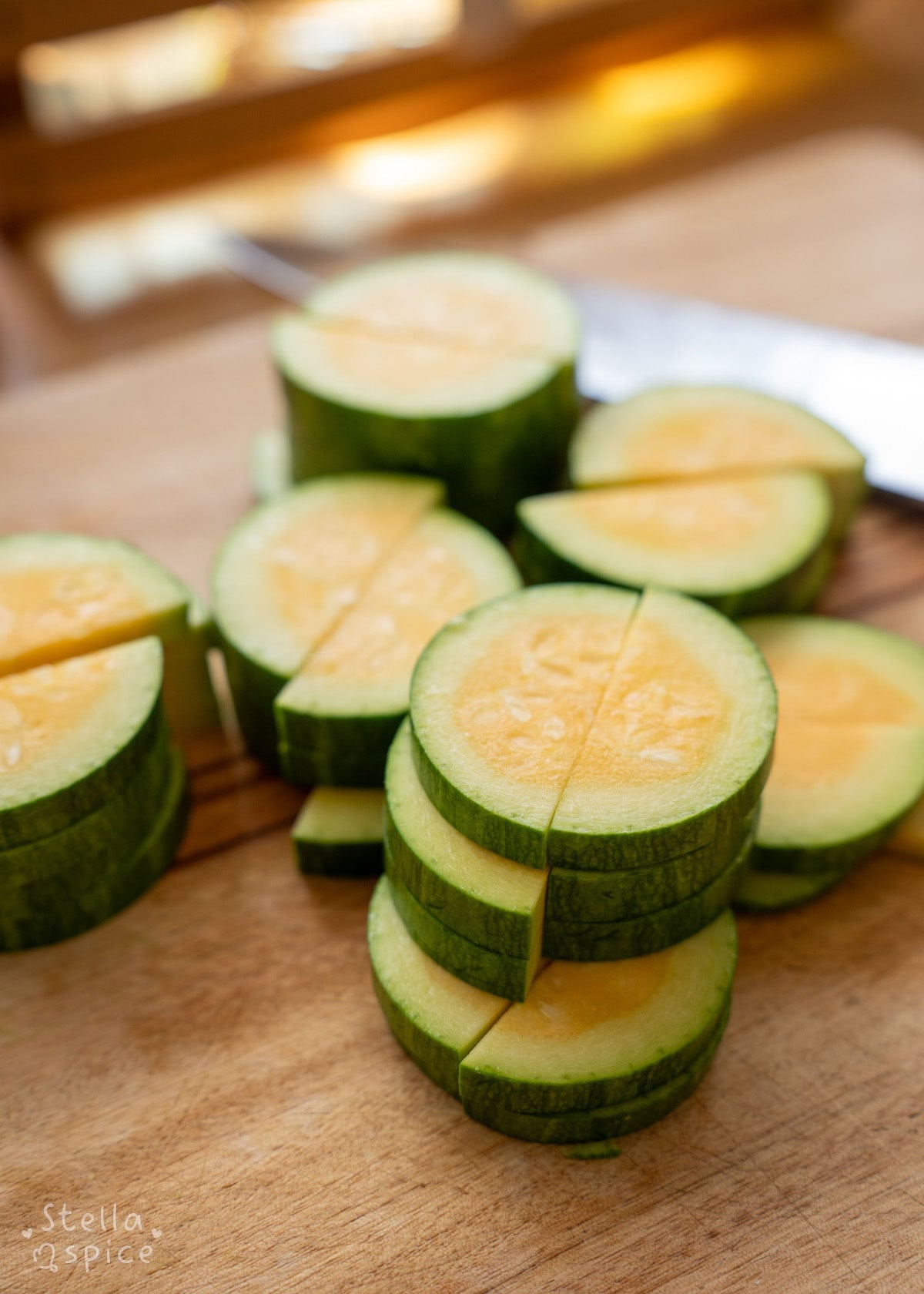
- Cut into whatever shape you prefer. I like half-moons so they hold their shape better, but strips are common too.

- Lightly salt the zucchini and toss until evenly distributed. Let it sit for 5-10 minutes while you slice your onions and minced some garlic.
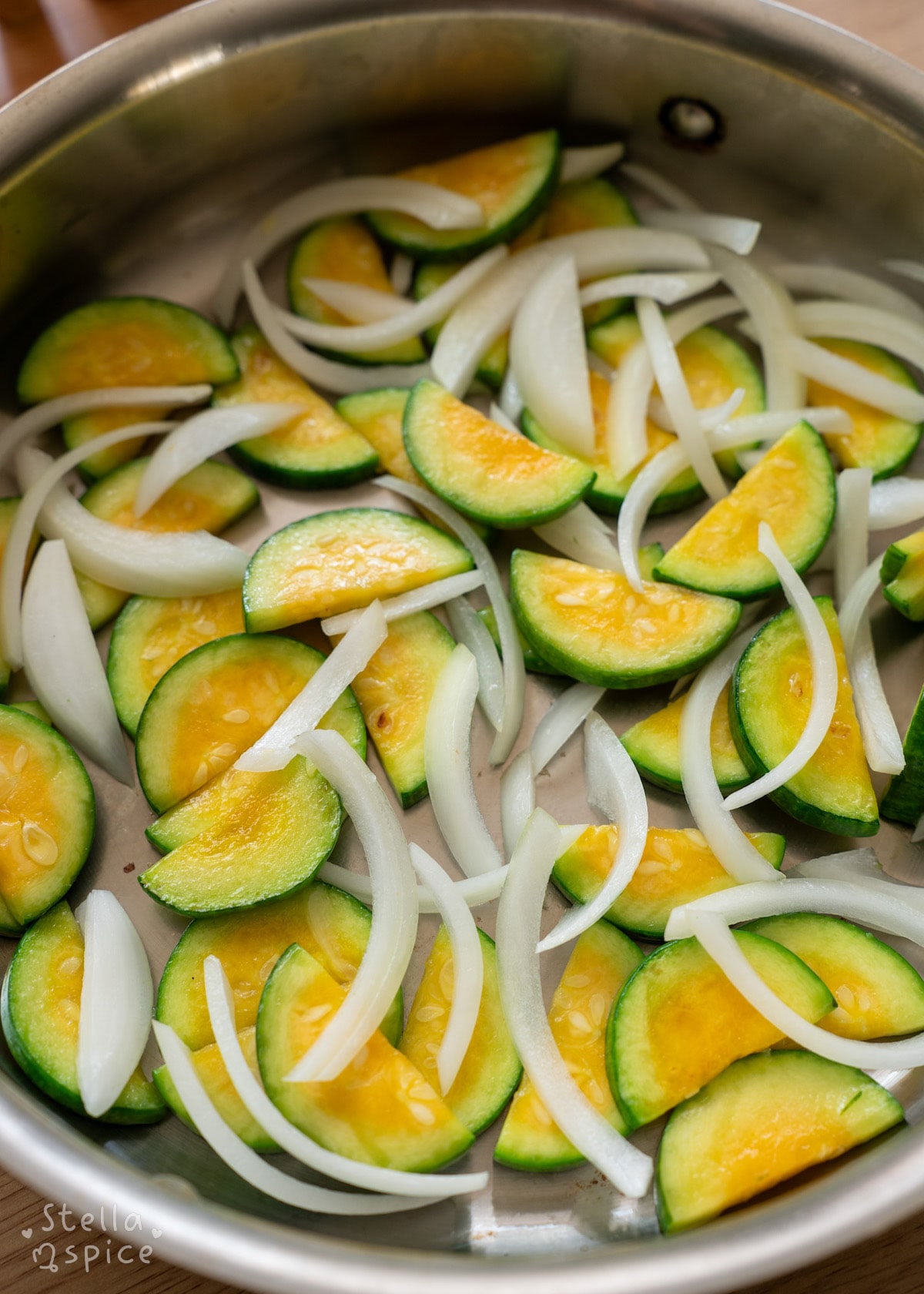
- Saute the salted ae-hobak and sliced onions in neutral oil over medium heat for a couple minutes.
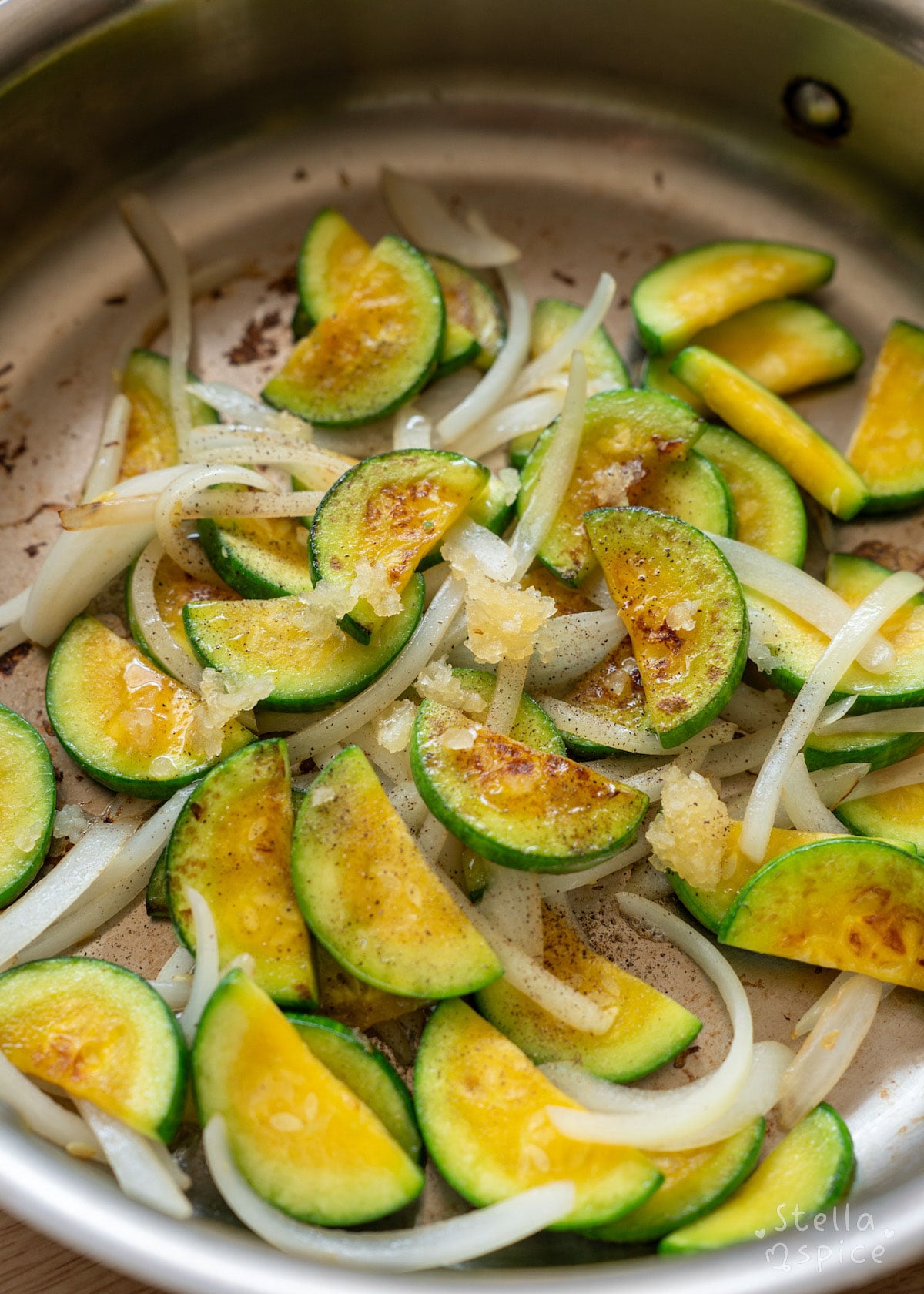
- Once the ae-hobak has softened just a little bit and taken on some color, add the garlic, pepper, and sesame oil and saute for another 1-2 minutes.
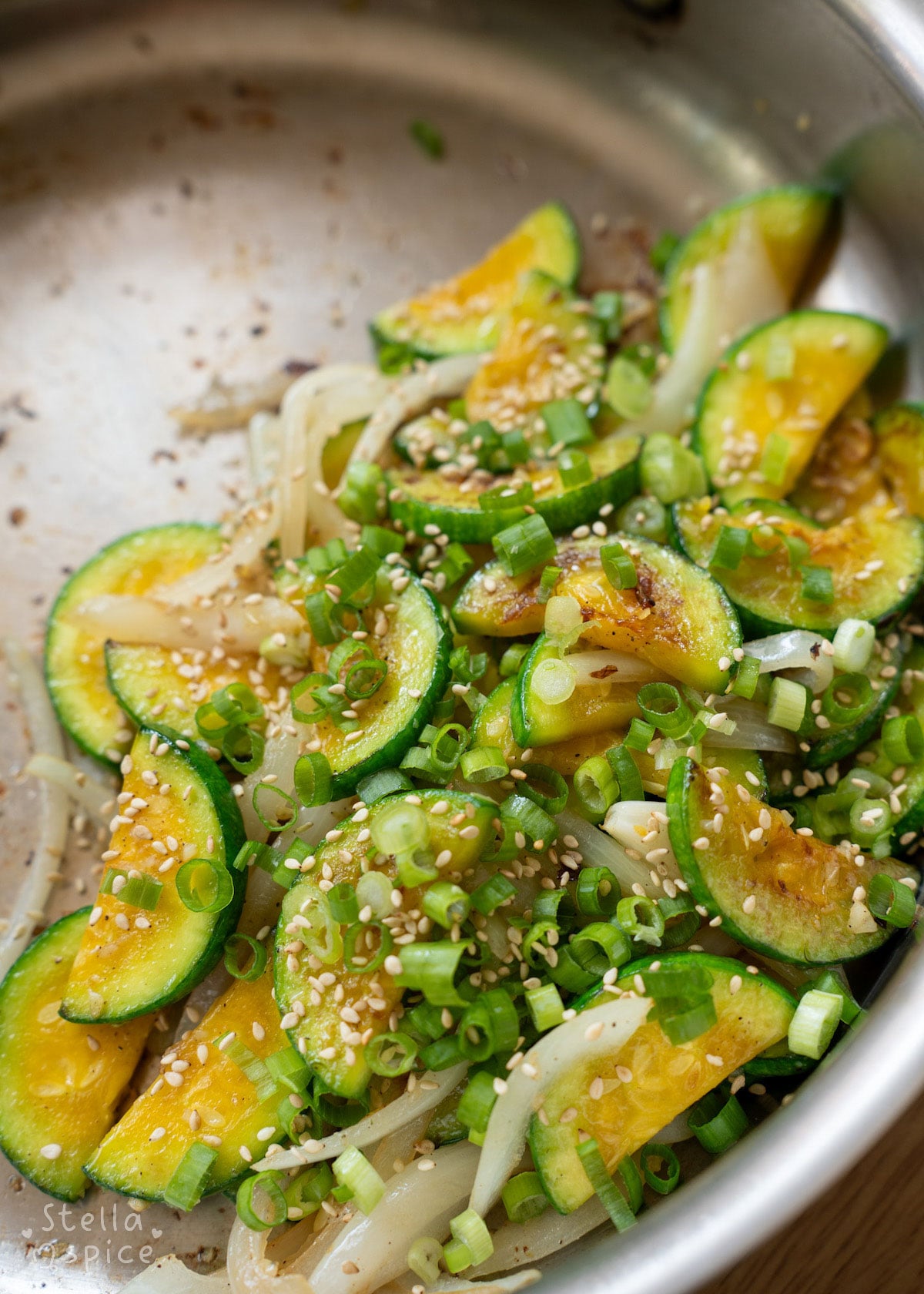
- It’s ready when the texture is soft but still has some firmness to its bite. Top with sesame seeds and chopped green onion.

- Serve right away or hold in the fridge for up to 3-4 days.
Recipe Tips
Taste the zucchini before cooking… if it’s been sitting in the fridge for a while. It may have started to spoil, which gives it an off taste. Zucchini can sometimes look perfectly fresh even when it’s gone bad, so a quick taste check can save your dish.
Don’t slice the zucchini too thinly, or it will become mushy and break apart easily.
Season lightly! It’s better to under-season than to over-season the zucchini while letting it sit. You can always add more salt as needed while cooking.
Avoid overcooking! Ae-hobak softens fast and tastes best when still slightly firm.
Serving Suggestions
Hobak Bokkeum makes a great banchan for just about any Korean meal. If you make it along with the following vegetable sides, these are perfect for using up leftovers to make a delicious Bibimbap!
- Kongmanul Muchim: Korean Seasoned Bean Sprouts is a classic banchan that is delicious & healthy!
- Seasoned Spinach: Sigeumchi Namul (Seasoned Spinach Side Dish) is another staple Korean side dish I almost always have in my fridge.
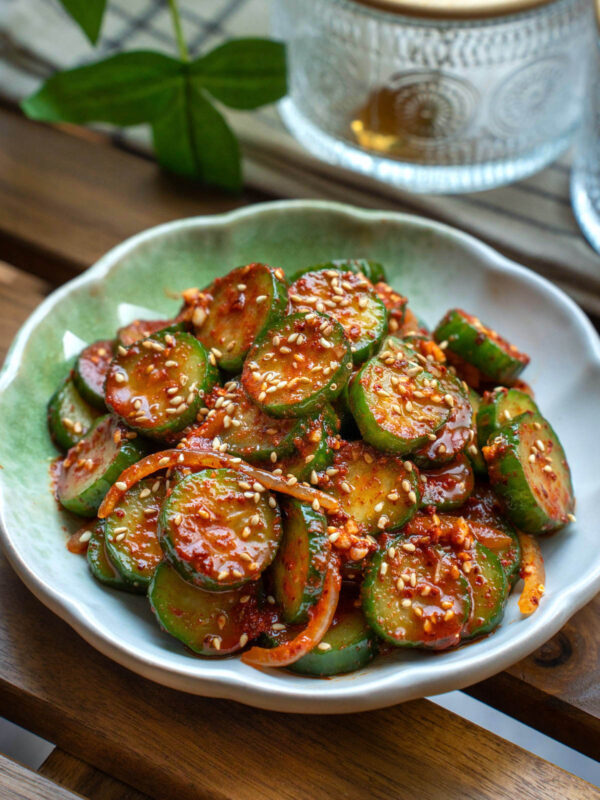
- Oi Muchim: This Korean Cucumber Salad is bright, crunchy, and lightly spicy, adding the perfect contrast to savory dishes.
- Bulgogi: Here is my Korean Beef Bulgogi Recipe if you prepared all these side dishes and want to add meat!
Variations
If you want to switch things up or have ingredients you need to use up, here are a few delicious twists on Hobak Bokkeum:
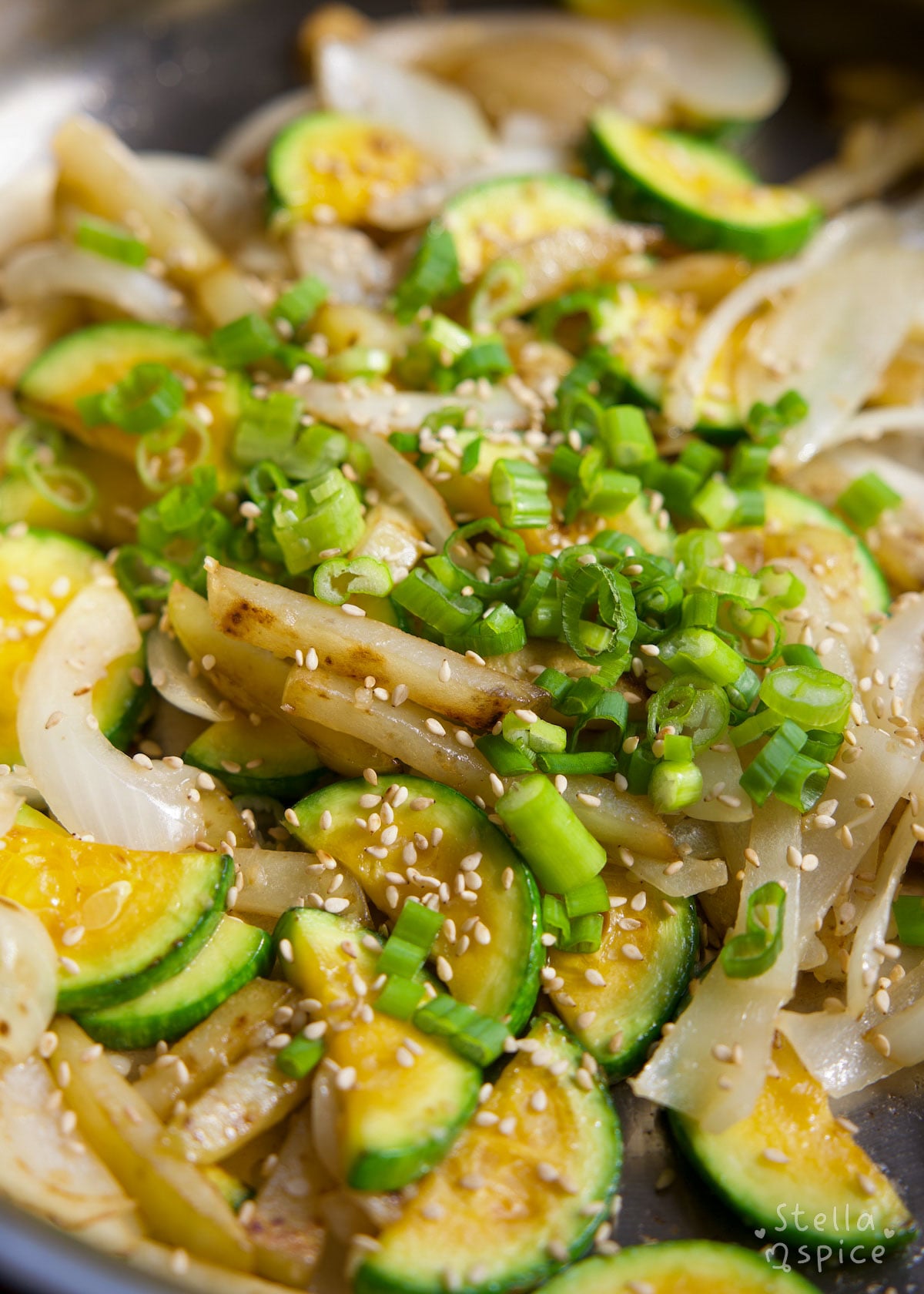
Gamja (Potato) + Hobak Bokkeum
My favorite variation! Salt the potatoes first to draw out moisture and season from the inside. Then saute with a little oil until they soften slightly, then add the zucchini and finish the stir-fry together. You get the tender sweetness of zucchini plus the hearty comforting bite of potato. My husband is a BIG fan of this one!
Mushroom + Hobak Bokkeum
For a more savory version, add a handful of thinly sliced mushrooms. Shiitake, oyster, or even white button all work well. Sauté the mushrooms first with a little neutral oil and salt until they release their moisture, then add the zucchini. The mushrooms add a subtle earthiness and “meaty” texture that makes the dish feel extra satisfying.
Spicy Hobak Bokkeum
If you prefer a bit of heat, sprinkle in gochugaru (Korean chili flakes) while stir-frying the zucchini. Start with ½ to 1 teaspoon and adjust to taste. The chili adds warmth, color, and a gentle kick without overpowering the natural sweetness of the zucchini.
Frequently Asked Questions
Regular zucchini works fine, just keep in mind that Korean zucchini is sweeter and softer. The dish still turns out delicious with standard green zucchini, you may just want to add a little sugar to mimic the original flavor, if desired.
Absolutely. It tastes great warm, at room temperature, or straight from the fridge. Just be careful not to overcook the zucchini so it stays tender and flavorful even when chilled.
3-4 days in the fridge. It may release a bit of water over time, but it will still taste good.
More banchan recipes

If you tried this Hobak Bokkeum recipe or any other recipe on my website, please leave a 🌟 star rating and let me know how it went in the comments below!
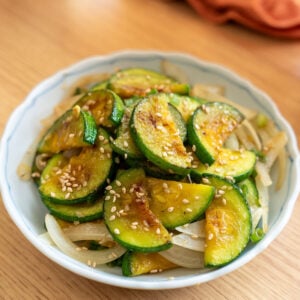
Hobak Bokkeum (Korean Stir Fried Zucchini)
Ingredients
- 1 Korean zucchini (ae-hobak), or regular zucchini
- ⅛–¼ tsp salt, *see notes
- ½ small onion, sliced
- 2 garlic cloves, minced
- 2 green onions, chopped
- 1 tsp neutral oil
- 1 tsp sesame oil
- ⅛ tsp black pepper
- 1 tsp sesame seeds
Instructions
- Wash and cut the zucchini into ⅓ inch rounds, then cut into whatever shape you prefer. I like half-moons so they hold their shape better, but strips are common too.

- Toss the zucchini in 1/4 tsp salt until evenly distributed. Let it sit for 5-10 minutes while you slice your onions and minced some garlic.
- Saute the salted zucchini and sliced onions in 1 tsp neutral oil over medium heat for a couple minutes.
- Once the zucchini has softened just a little bit and taken on some color, add the garlic, black pepper, and sesame oil. Saute for another 1-2 minutes.
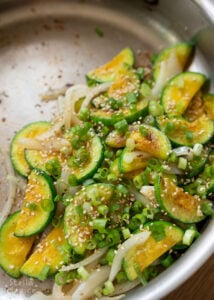
- It's ready when the texture is soft but still has some firmness to its bite. Top with sesame seeds and chopped green onion.
- Serve right away or hold in the fridge for up to 3-4 days.


Notes
- Taste the zucchini before cooking… if it’s been sitting in the fridge for a while. It may have started to spoil, which gives it an off taste. Zucchini can sometimes look perfectly fresh even when it’s gone bad, so a quick taste check can save your dish.
- Don’t slice the zucchini too thinly – or it will become mushy and break apart easily.
- The type of salt you use matters – because table salt is finer, start with ⅛ tsp. For coarser salts like kosher or sea salt, start with ¼ tsp.
- Season lightly – it’s better to under-season than to over-season the zucchini while letting it sit. You can always add more salt as needed while cooking.
- Avoid overcooking – ae-hobak softens fast and tastes best when still slightly firm!
Nutrition
Nutrition information is automatically calculated, so should only be used as an approximation.








I’ve been making hobak bokkeum with regular zucchini my entire life and had NO idea there is a specific kind for Korean dishes! This was sooooo good, the ae hobak really makes such a difference. I will be adding this to my weekly banchan rotation!